Lancaster County, Pennsylvania

The County

The rock before anyone. The land before the map. The nations who managed it. The first Europeans, Penn, the people who moved in. The founding. The Revolution. The years in between. The towns, the legends, and the county as it stands circa the 2020s — every people on the ground, and why all of it feeds Tales of the Red Rose.

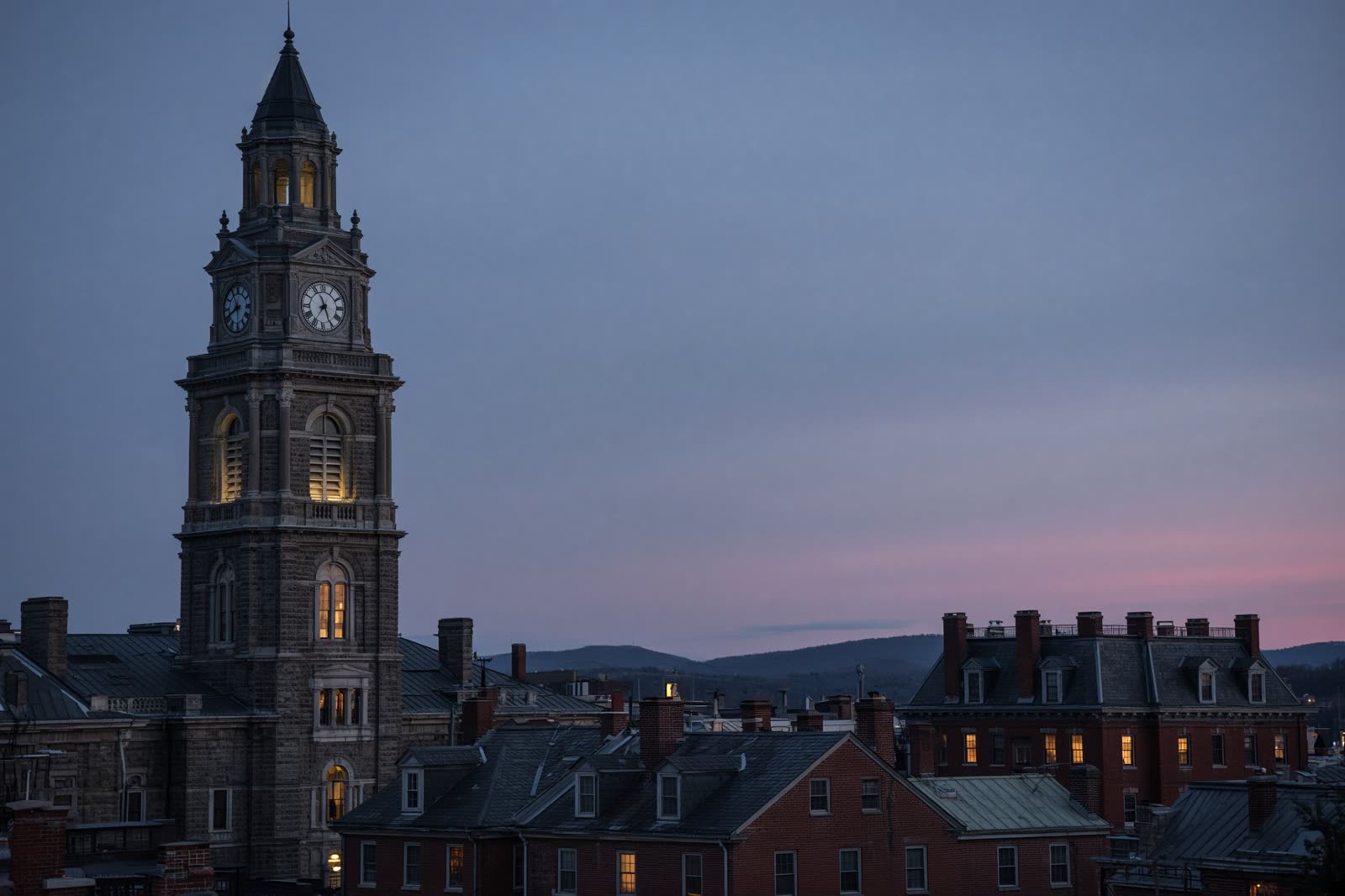
History below is the public record. Photographs: Photo Freak.

00

Prehistory

Long before humans, before apes, before mammals, the ground that is now Lancaster County was not ground. It was a tropical seafloor, then the interior of a supercontinent under Himalaya-sized mountains, then a ripping rift valley on the way to an ocean. Dates below are rounded. Science revises them. This is the rock record as it stands, not a complete census of every animal that ever passed through.

We are not going to say “dinosaurs” and walk away. The Cambrian sea here had trilobites and radiodonts. The Triassic rift had phytosaurs, giant amphibians, small bipedal dinosaurs, cycads, and one awkward skeleton from Bowmansville. The ice never sat on this county, but the cold did, and with it mastodons. The familiar woods come last. Then people. This chapter stops at that door.

Cambrian–Ordovician · ~510 to 450 million years ago

A warm tropical sea

If you could stand in what is now Lancaster County around 512 million years ago, you would be hundreds of feet underwater. The ground sat on the edge of an ancient continent called Laurentia, under a shallow tropical sea. Over tens of millions of years, the calcium-carbonate shells of the things living in that water piled up on the seafloor and became the thick blue limestone and dolostone under the Conestoga Valley — Vintage, Kinzers, Ledger, then the Conestoga Limestone. That rock is why the farms work. It is also why we have sinkholes. The Kinzers Formation is named for the village of Kinzers, in this county. It is one of the better Cambrian fossil beds in North America.

Late Paleozoic · ~300 to 250 million years ago

Himalaya-sized mountains

Plates moved. The crust that would become Africa slammed into North America — the Alleghanian Orogeny. The collision crumpled Pennsylvania into a mountain range that rivaled the modern Himalayas. By the time Pangaea was assembled, this county was locked in the interior of a supercontinent, under heat, pressure, and faulting. Southern Lancaster metamorphosed: schist, quartzite, the Martic Line. Chickies Rock is not a cliff that appeared for the view. It is Cambrian sandstone cooked into quartzite, then left standing after everything softer wore away. The mountains themselves are gone. Their roots are the ridges.

Triassic–early Jurassic · ~230 to 190 million years ago

The rift that became the Atlantic

Pangaea tore. A continental rift opened where the Atlantic would later sit. Northern Lancaster dropped into a fault-bounded basin — the Gettysburg–Newark Lowland. Iron-rich red sediment washed into the hole. That is the red rock and red soil of the north county. Volcanic and intrusive activity left diabase dikes and sills (York Haven diabase — the dark “ironstone”). Then the basin stopped dropping, the ocean opened farther east, and tens of millions of years of rain took the rest. We do not have a Jurassic park in the limestone. We have a worn-down rift and a sea floor that became a farm.

Pleistocene · last ~2.6 million years, especially the last 100,000

Ice to the north, cold on this ground

The ice sheets of the last glaciation covered about 30 percent of Pennsylvania — the northwest and northeast. They did not reach Lancaster County. This ground stayed unglaciated, which is not the same as warm. It was a cold, periglacial county at the edge of the ice: tundra-steppe, spruce, the animals that could live in that. When the ice pulled back, the river cut the valley we have now. What came next — the familiar woods, then people — is the preamble at the bottom of this chapter.

What swam, crawled, and walked

Named where the rock in this county or this watershed actually holds them. Regional Ice Age animals are marked as such. We will not pin a T. rex on a limestone farm.

Cambrian sea

Trilobites

Olenellus · Wanneria

Jointed marine arthropods, among the oldest animals with hard parts in this county’s rock. Olenellus thompsoni, Olenellus getzi, and the large Wanneria walcottana turn up in the Kinzers shale. They crawled and swam a tropical seafloor that is now a railroad cut and a quarry.

Cambrian sea

Radiodonts

Anomalocarid relatives · Lenisicaris

Swimming predators with grasping frontal appendages — the family that includes Anomalocaris. The Kinzers Formation holds one of the more diverse Cambrian radiodont faunas known, at least ten species, including Lenisicaris pennsylvanica. Not a dinosaur. Older, marine, and stranger.

Cambrian sea

Echinoderms and the rest of the floor

Yorkicystis · Tuzoia · sponges

Yorkicystis haefneri is an edrioasteroid — a plated, stemless echinoderm glued to the seafloor. Tuzoia getzi is a bivalved arthropod. Sponges like Hazelia sat in the mud. Hemichordate traces (Margaretia) are in the same beds. The limestone itself is the compacted leftover of countless smaller shells. The farmland is built on their graves.

Triassic rift

Phytosaurs

Rutiodon and kin

Long-snouted reptiles that look like crocodiles until you notice the nostrils sit far back on the skull, near the eyes. They hunted the rift-valley rivers. Skulls and teeth from the New Oxford / Gettysburg beds of this watershed. Not crocodiles. Not dinosaurs. A different experiment that lost.

Triassic rift

Metoposaurs

Anaschisma · giant amphibians

Flat-headed temnospondyl amphibians the size of a small boat, sitting in the shallows of the rift lakes with eyes on top of the skull. The watershed has yielded Anaschisma (once filed as Koskinonodon / Buettneria). Before frogs as we know them. After the sea was gone.

Triassic rift

Small bipedal dinosaurs

Tracks, not T. rex

Honesty: this county does not produce giant Jurassic predators. The Late Triassic red beds hold three-toed tracks — Grallator, Atreipus, Anchisauripus — the footprints of small bipedal dinosaurs, coelophysoid-type theropods and their cousins. Near Bowmansville, in the Hammer Creek Formation, a skeleton named Sphodrosaurus pennsylvanicus. It was billed as a dinosaur for years. Later work treats it as a basal archosauriform of uncertain relationships. A cast sat at the North Museum in Lancaster. The tracks are the honest dinosaur record here.

Triassic rift

Cycads, ferns, horsetails, petrified wood

The rift forest

The red beds are not empty of plants. Cycads (Zamites, Pterophyllum, Dioonites), ferns, horsetails (Equisetum), ginkgo relatives, conifer-like shoots, petrified wood. Named from the Conewago and York side of the same basin — the forest that stood while the rift dropped. Northern Lancaster’s red soil is that forest’s leftover iron.

Ice age

Mastodons and mammoths

Proboscideans · Pleistocene

American mastodon (Mammut americanum) and mammoths ranged Pennsylvania as the ice sat to the north. Mastodon is the better-documented of the two in this state — browse-eaters of spruce and wetland, not the open-steppe grazers the mammoths were. Lancaster County has not produced a famous mounted skeleton. The Marshalls Creek mastodon, farther northeast, did. They belong in this chapter because the climate here could hold them. They were gone before the nations section starts.

Ice age

The rest of the cold bestiary

Giant beaver · ground sloth · the usual suspects

Pennsylvania’s Pleistocene also holds giant beaver (Castoroides), Jefferson’s ground sloth (Megalonyx), and the wider North American cast — dire wolf, saber-toothed cat — in the regional record. Not every name has a Lancaster quarry tag. We are not going to pretend they all do. The point is the ground was not empty between the rift and the first people. It was cold, wooded or open by turn, and full of animals that did not survive us.

Still 00 · the door

Preamble to modern day

This is the messy middle. The giants leave. The woods we would recognize fill in. Then people. The order overlaps, the dates move when labs rerun the charcoal, and nobody gets a clean cut. That is not a dodge. It is how the record actually looks.

The animals we would recognize

They were already here

White-tailed deer, black bear, wolves, foxes, beavers that were not the size of a car, wild turkey, the small things in the trees — those lineages did not pop into existence the Tuesday after the last mastodon died. They were already walking the late Ice Age with the giants. What changed is the neighborhood, not the invention of a deer.

The woods fill in

Roughly 13,000 to 10,000 years ago the megafauna collapse and the climate lurch. The Younger Dryas snaps cold, then the Holocene warms. Spruce and tundra-steppe give way, in this unglaciated valley, to mixed forest: oak, hickory, hemlock, pine. The river looks more like a river and less like a meltwater ditch. That is when the cast starts to look like “Pennsylvania woods” instead of “the edge of the ice.”

The familiar roll

White-tailed deer. Eastern elk. Black bear. Gray wolf. Mountain lion. Beaver. Wild turkey. Fox. Raccoon. Squirrel. The fish in the Susquehanna. Some of those later get shot, trapped, and logged out of this county — elk, wolf, cougar, beaver — and have to be argued back in the 1900s. That is a later chapter. Here they are simply the animals on the ground before anyone we can name.

Then people

Accessible is a slippery word. Lancaster County was never under the ice. A person could have walked this limestone whenever people were in the Mid-Atlantic. The bottleneck was not a glacier on Chickies. It was whether anyone had reached eastern North America yet, and whether the cold still made the trip not worth it.

The oldest serious claim in Pennsylvania is Meadowcroft Rockshelter, western part of the state, not this county: people under a rock overhang perhaps 16,000 years ago, some tours say older. The dates are argued. They have been argued for fifty years. We are not going to pretend the argument is over. What is not argued: by about 13,000 years ago, fluted-point people — the Paleoindian horizon, often filed as Clovis — are clearly in this region. The Shoop site in Dauphin County, the next county north, is one of the largest Paleoindian camps in the Northeast. Shawnee-Minisink sits on the Delaware. The lower Susquehanna is in the same neighborhood. Small, mobile bands. They hunted deer and elk, maybe the last of the giants, and they ate plants. The record is hearths, points, and a lot of ground we have paved.

These are the deep ancestors of the Native nations of the Eastern Woodlands — the people whose descendants, thousands of years later, are the Lenape, the Susquehannock, the Shawnee, and the rest of chapter 02. That is not the same as saying a Clovis hunter on this river was already Conestoga. Languages change. Towns are invented. Nations form and break. The Shenks Ferry people and the Susquehannock are still a long walk from here. The being-here starts here.

After that: Archaic millennia of hunting and gathering as the forest thickens. Then Woodland. Then the named towns. That is the next section. This one stops at the door.

00 · Ruin

Before anyone kept a death roll

Ice dams, megafloods, lightning, bison, a fault that still ticks. Natural disaster without a coroner. The rock chapter is Prehistory. This is what the rock did to the ground.

Natural · ~200 million years ago

Rift, diabase, and the fault that still ticks

Pangaea tearing apart. Magma up the cracks, cooled into diabase ridges across northern Lancaster. The Triassic Border Fault is still down there. This county sits on the edge of that old breakup. Minor, localized earthquakes are the leftover. The full rock story is Prehistory. This is the disaster that did not finish: the ground can still jump.

Kind
Rift volcanism + fault
Dead / hurt
No people yet
Still
Minor quakes on the old break

Natural · Late ice · Bald Eagle dam

The outburst floods

An ice dam on Bald Eagle Mountain, central Pennsylvania. Glacial Lake Lesley behind it — on the order of tens of cubic miles of meltwater in the bigger reconstructions. When the dam failed, the water went south down the Susquehanna. Debris-charged, roaring. At Conewago Falls (Falmouth, Conoy Township, Lancaster County side) it carved potholes into the bedrock — some a foot or two across, some much larger — with sediment spinning like underwater tornadoes. Same garden of scoured rock below Holtwood. The ice never sat on this county. The flood still wrote on it.

Where it shows
Conewago Falls · Holtwood
Dead / hurt
Before the nations we can name
What remains
Potholed bedrock, still

Natural · c. 1100–1300 · 1500–1800 CE

Megafloods on the river

USGS sediment cores on the Susquehanna: high-flow intervals that dwarf the storms we have numbers for. Roughly 1300–1100 CE, then 1500–1800 CE. Hurricane landfalls and hard winter/spring melts in cold climate windows. The valley got scoured before anyone here kept an English diary. Native oral history on the river warned early traders about great floods. We do not have a body count. We have the mud and the warning.

Kind
River megafloods
Dead / hurt
Not in a ledger
Source
USGS cores · oral history

Natural · Before the closed canopy

Lightning, bison, open ground

Central Lancaster was not always a heavy forest. Meadow, grassland, savanna. Two forces kept the brush from winning: lightning-set wildfires, and heavy grazing by bison. That is a disaster if you are a tree line. It is also how the land looked when the first people walked it. The closed woods come later. The fires were not a one-year event. They were a climate.

Kind
Fire + graze
Dead / hurt
Not a human toll sheet
Result
Open ground, then woods

01

Before the county

People lived on this river long before anyone named a county after an English rose. The limestone, the floodplains, the cliff at Chickies — Chiquesalunga, the place of the crayfish — already had names that were not English. Conestoga. Pequea. Conoy. Those names outlasted the towns that first said them, which is not the same as saying the people are gone.

The next section is those nations. This section is the ground as people found it — already named, already walked. The Great Minquas Path already ran from the Susquehanna toward the Schuylkill. Strasburg Road still roughly follows it. The county did not invent a trail. It paved one.

Swiss-German Mennonites were already clearing limestone soil in the 1710s. The Hans Herr House went up in 1719. Conestoga Township was erected in 1718, while this land was still Chester County. Farms arrived on occupied ground. That is the order of events.

The county did not invent the land. It arrived late, with a seal and a rose.

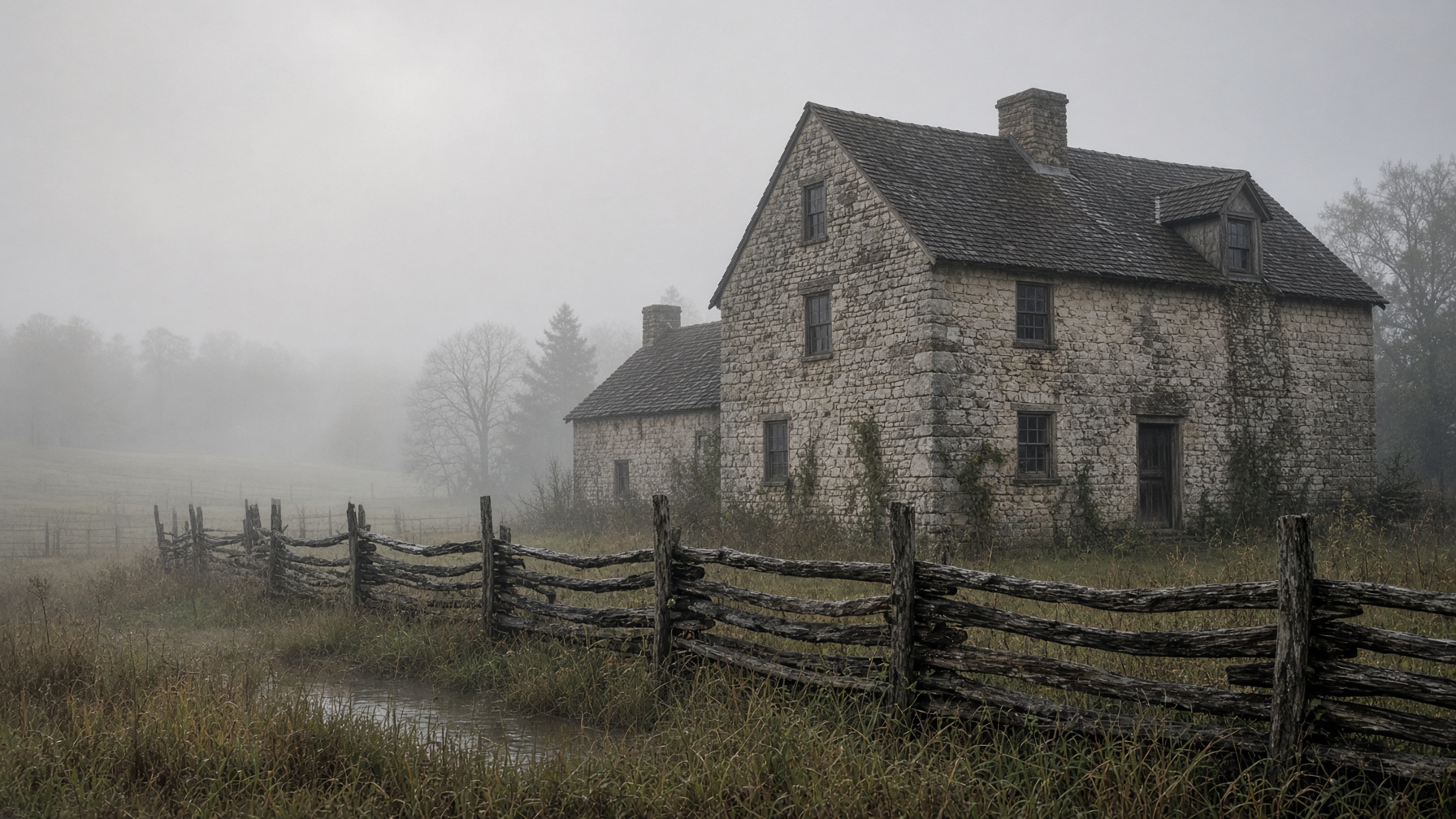
AI still: a limestone farmhouse in fog

02

The nations

We talk about history honestly here. If this tab is about Lancaster County, it has to talk about the people who managed the land before most of our ancestors came over. Not as a footnote. As the first chapter that still has living people in it.

The Susquehannock were the river nation on this ground. The Shenks Ferry people were here before them. Lenape, Shawnee, Conoy, Nanticoke, Tuscarora, Haudenosaunee, and Mingo hunted, treated, fled, and settled through this county as the coast pushed west and the north made war. The Great Minquas Path is why. So is the river.

What happened after is not a mystery. Disease. War. Removal. A massacre in this county in 1763. Then paperwork that called people extinct so the land would be easier to keep. Pennsylvania still has no federally recognized tribes and no reservations. That is a fact about the state. It is not a fact about whether descendants made it into the 2020s. Many did. They live in Oklahoma, New York, Wisconsin, Ontario, Maryland, New Jersey, Delaware — and some still in Pennsylvania, without a government here that will say their names on a seal.

This site is not a tribal government, a county office, or a land-acknowledgment mill. We do not speak for these nations. We are saying they were here, what the record did, and who is still here. If you want the nations themselves, go to them.

On this ground

The people who were already here when the written record arrived — and the culture archaeologists can name but cannot interview.

Before the Susquehannock · ~1300s–1500s

Shenks Ferry people

Late Woodland · an archaeological name

The Late Woodland culture on this river immediately before the Susquehannock came down in the 1500s. Palisaded towns, maize, the lower Susquehanna. Archaeologists named them for a site. They left no written language, and they did not survive as a named people into the era of European contact. We do not have their name for themselves.

Into the 2020s

Absorbed or displaced by the Susquehannock around the mid-1500s. No living nation carries this label. Their ground is still here. Their name for themselves is not. Honesty means saying that out loud.

Iroquoian · Washington Boro, Manor, Columbia

Susquehannock

Conestoga · Minquas · Andaste

The most documented nation permanently settled in what became Lancaster County. Iroquoian-speaking. Large palisaded longhouse towns — Washington Boro, Manor Township, the Columbia shore — some holding up to a few thousand people. They ran the fur trade on the Great Minquas Path. The Dutch called them Minquas. The French called them Andaste. Captain John Smith met them on the Chesapeake in 1608 and wrote them as a people who filled the doorway. Smallpox, Maryland wars, and the Beaver Wars broke them in the 1600s. A remnant, joined by Seneca families, rebuilt on the Conestoga River in the late 1680s. The English called that town the Conestoga. William Penn took a deed from them in 1700 and 1701 and promised protection.

Into the 2020s

On December 14, 1763, a Paxton Boys mob murdered six Conestoga at the village. Fourteen survivors were locked in the Lancaster workhouse “for protection.” On December 27 the same mob broke in and killed them — while the town was in church for Christmas. That ended Conestoga Town as a living community on this ground. It did not end the people. Kin had already gone north into Haudenosaunee towns — Seneca, Cayuga, Oneida. Some married into settler families. Oneida pine-tree chief John Skenandoa was born Susquehannock; his descendant Joanne Shenandoah carried that line in public. Others went west with Mingo bands and sit today among the Seneca-Cayuga Nation in Oklahoma and the Six Nations of the Grand River in Ontario. A Conestoga-Susquehannock Tribe organizes in Pennsylvania from documented descendants. It is not federally recognized. Pennsylvania recognizes no tribes. Colonial paperwork called them extinct because extinct people cannot hold a treaty. The massacre is also in the years section. It is this county’s wound. It is not a vanishing.

Who came through

Colonization on the coast and war in the mountains moved people. Lancaster County became a refuge and a hinge on the Great Minquas Path and the river. These nations were not tourists. They hunted here, treated here, and some of them named the water.

Algonquian · the Delaware Valley

Lenni-Lenape

Delaware · Lenape · “the people”

The original people of eastern Pennsylvania and the Delaware Valley. They hunted, fished, and traveled this county and shared river country with the Susquehannock. They treated with William Penn. The Walking Purchase of 1737 and the wars that followed pushed them west, then west again — Ohio, Indiana, Kansas, Indian Territory.

Into the 2020s

Three federally recognized Lenape nations sit outside Pennsylvania: the Delaware Nation in Anadarko, Oklahoma; the Delaware Tribe of Indians in Bartlesville, Oklahoma; and the Stockbridge-Munsee Community in Wisconsin. Munsee-Delaware and the Delaware Nation at Moraviantown are in Ontario. Closer to the old valley: the Nanticoke Lenni-Lenape Tribal Nation in New Jersey, the Lenape Indian Tribe of Delaware, and the Lenape Nation of Pennsylvania. That last one has no federal recognition, because this state still has none. The people did not vanish. The map just stopped listing them here.

Algonquian · Ohio Valley, then this creek

Shawnee

Piqua band · Pequea

Ohio Valley people. Bands moved east in the late 1600s. The Susquehannock and William Penn permitted them to settle along Pequea Creek — named for the Piqua band — and along the Susquehanna. They did not get to stay. Colonial pressure, the next wars, and a century of removal sent them west through Ohio, Missouri, Kansas, and Indian Territory.

Into the 2020s

Three federally recognized Shawnee nations, all in Oklahoma: the Absentee Shawnee Tribe, the Eastern Shawnee Tribe, and the Shawnee Tribe. The creek in this county still says their band’s name. They do not live on it. That is the honest version.

Algonquian · Conoy Creek and Conoy Township

Conoy

Piscataway · Ganawese

Piscataway people of the Potomac and the Maryland tidewater. Colonial pressure pushed bands north in the late 1600s and early 1700s. The Haudenosaunee called them Conoy. They settled western Lancaster County. The creek and the township still carry the name because they were here long enough to leave it.

Into the 2020s

Some went on to the Six Nations of the Grand River in Ontario. Many stayed in southern Maryland, often uncounted, through the 1800s and 1900s. Maryland recognized the Piscataway Conoy Tribe and the Piscataway Indian Nation in 2012. They are not a vanished people. They are a people the records tried to lose.

Algonquian · from Maryland’s Eastern Shore

Nanticoke

Tidewater people

Tidewater people of the Eastern Shore. Groups moved into the Susquehanna Valley with the Conoy in the early 1700s, using Lancaster as a stop and a refuge on the way north and west.

Into the 2020s

The Nanticoke Indian Association at Millsboro, Delaware, is state-recognized. The Nanticoke Lenni-Lenape Tribal Nation is state-recognized in New Jersey. Families also live among the Six Nations in Ontario. They are still a named people on the bay they came from.

Iroquoian · through this county, 1710s

Tuscarora

Skarù·ręʔ · sixth nation

After the Tuscarora War in the Carolinas (1711–1713), refugees walked north. Bands stopped among the Conestoga in Lancaster County to rest and negotiate, then continued into Haudenosaunee country. They became the sixth nation of the Confederacy around 1722.

Into the 2020s

The Tuscarora Nation is in western New York, near Niagara. Another community lives at Six Nations of the Grand River in Ontario. They passed through this county. They did not end here.

The Confederacy · Seneca especially

Haudenosaunee

Iroquois · Five Nations, then Six

Mohawk, Oneida, Onondaga, Cayuga, Seneca — later Tuscarora. They fought the Beaver Wars for the fur trade, treated and warred across this valley, and after the Susquehannock broke they claimed the watershed. Seneca in particular used Lancaster country for diplomacy, hunting, and the absorption of remnants.

Into the 2020s

Still sovereign. Seneca Nation of Indians and the Tonawanda Seneca in New York. Onondaga Nation. Oneida Indian Nation in New York and the Oneida Nation in Wisconsin. Cayuga Nation. Mohawk communities on both sides of the border. Six Nations of the Grand River in Ontario. They did not become a chapter in somebody else’s book. They are governments.

Iroquoian · multi-ethnic bands

Mingo

Ohio Iroquois · a colonial label

Not a single origin nation. Iroquoian-speaking communities — mostly Seneca and Cayuga, with Susquehannock and others folded in — who moved into the Ohio country in the 1700s. They show up in the Lancaster-era record as one of the peoples on this ground when the first European farms went in. The word is a colonial label. The people under it were real.

Into the 2020s

Descendants live among the Seneca-Cayuga Nation in Oklahoma and the Six Nations of the Grand River. The label thinned. The people did not.

02 · Before Penn

The first Europeans

A handful of men on a river that already had a nation on it. They did not found a county. They named things, traded, claimed, and left. Permanent houses come later.

Captain John Smith came up the Susquehanna from the Chesapeake in 1608. He did not reach what is now Lancaster city. He met the Susquehannock, called them giants, drew one, and wrote the name the English still use. He also noticed they already had iron hatchets — Dutch trade, via the Minquas Path, before any Englishman walked this limestone.

The Dutch out of New Netherland and the Swedes out of New Sweden (1638–1655) ran the fur. Minquas is what they called the Susquehannock. The path from the river toward the Schuylkill is why Strasburg Road still sits where it sits. Maryland claimed the lower river from the south. Maps got drawn. Deeds got argued. Nobody stayed the winter in a house on this ground that we can prove.

William Penn’s 1681 charter covered this land on paper. John Kennerly took a deed in 1691. Matthias Kreider is rumored that early. The record does not show a European settlement in what became Lancaster County before 1710. Traders, surveyors, a claim. Then the farms.

1608

Smith on the river

Jamestown captain. Chesapeake, then the mouth of the Susquehanna. Friendly talk with sixty Susquehannock. Anglican chant, gifts, a drawing. First English name on a people who already had one.

1610s–1655

Dutch and Swedes

New Netherland. New Sweden on the Delaware. Fur, not farms. The Minquas Path is their scar on this county. They were gone as flags before the Mennonites arrived. The trade was not.

The south claim

Maryland’s river

Lord Baltimore’s charter ate the lower Susquehanna on a map. The border fights came later. In the 1600s it was a claim, not a town. This ground was still a nation with palisades.

Before 1710

No town yet

Kennerly’s deed, 1691. Stories of Kreider. No evidence of a lasting European house in this county before the Pequea Mennonites. Occupation of the land starts with the nations. European occupation starts in 1710. Say it in that order.

1681–1718

William Penn

He never lived here. He still wrote the rules this county was born under.

Charles II paid a debt with a woods. March 1681, a charter: Pennsylvania. Penn was an English Quaker who had sat in the Tower for the faith. He advertised a Holy Experiment — liberty of conscience, a Frame of Government, land sold instead of only seized in the old style. He arrived in 1682. He treated with the Lenape. Some of that story is true. Some of it was later polished until it shone more than the deeds.

This county was inside the charter and outside his daily life. He died in 1718, in England, eleven years before Lancaster County had a name. His sons were less Quaker about land. The Walking Purchase of 1737 is eastern Pennsylvania’s wound, not this county’s, but it is the same family. Penn’s gift to this ground was the invitation: Mennonites, Huguenots, Presbyterians, anyone the old countries wanted gone. The fine print was still a proprietary colony. Native title was “purchased” on terms the buyers wrote.

Name the man. Do not canonize him. Without the 1681 paper there is no 1729 county. Without the nations there is no paper worth having.

03

Founding

On May 10, 1729, Lancaster County was carved from Chester — the first inland county in Pennsylvania, the first west of Philadelphia, Bucks, and Chester. It was named for Lancashire, and for the red rose of the House of Lancaster. The city was laid out the next year, 1730, on James Hamilton’s ground. It is still the Red Rose City. It is still the county seat.

Who came: Mennonites and other German-speaking farmers on the limestone. Scots-Irish on the ridges. English Quakers along the river at Wright’s Ferry. The mix is the point. Lancaster was never only one people, even when the courthouse pretended otherwise.

Central Market claims 1730 and still runs — the oldest continuously operating farmers market in the country. The Conestoga wagon took its name from the river and the townships here; it was the freight truck of the eighteenth century. Gunsmiths in these shops built the long rifle later called Kentucky. The county was, for a while, the western edge of the English seaboard, and it behaved like one.

The people of that first generation are not a sentence. They are the cards below. Swiss Mennonites on Pequea in 1710 — first proven European settlement, before the county even had a name. Palatines. English Quakers. Ulster Scots. Welsh. Huguenots. Enslaved Africans, because honest history does not get to skip the market that included them.

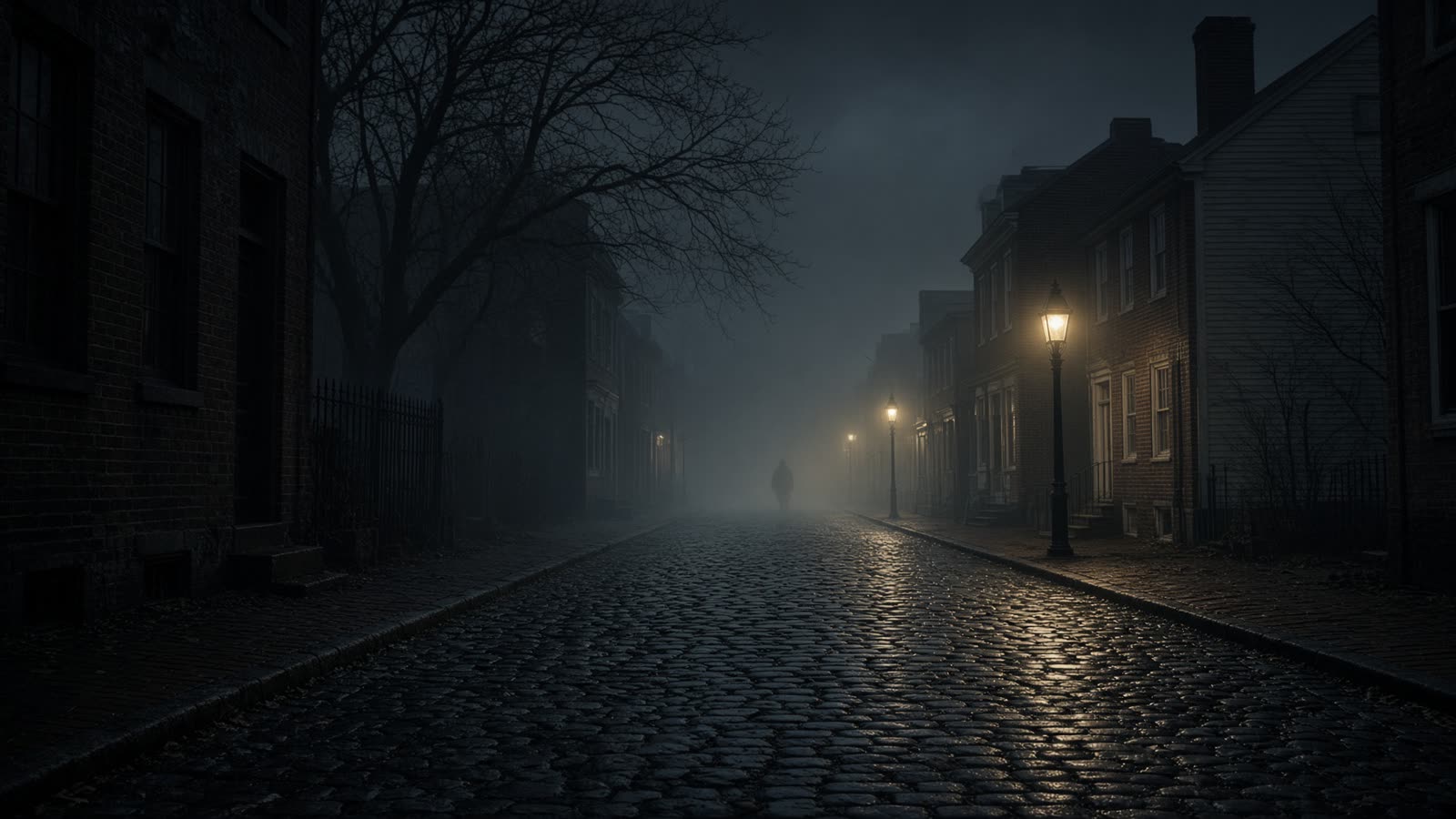
AI still: a colonial street in fog

After Penn’s invitation, before and into the courthouse. The people who actually moved in.

1710 · Pequea

Swiss Mennonites

Hans Herr and a company of Swiss Anabaptists bought about 10,000 acres on Pequea Creek from Penn’s land office. First proven European settlement in this county. The 1719 Hans Herr House is still there. Willow Street, Lampeter, Strasburg, Byerland. They came for the limestone and the right not to be killed for adult baptism.

1710s–1750s

Palatines and other Germans

Not all “Pennsylvania Dutch” are Mennonite. Lutherans, Reformed, church people from the Palatinate and the Rhine. They took the limestone too. German was a public language here into the twentieth century. Manheim is a German name on the original township list. The dialect is still spoken. It is not Dutch from Holland.

The river

English and Quakers

Wright’s Ferry, later Columbia. English Quakers on the Susquehanna. English names on the first townships: Lancaster, Warwick, Martic, Sadsbury, Salisbury, Hempfield. The courthouse would speak English even when the farms did not.

The ridges

Ulster Scots

Scots-Irish out of Ulster. Presbyterians. Donegal, Drumore, Derry, Leacock on the 1729 list. They took the ridges the German farmers had not claimed yet, which is a polite way of saying they sat on the frontier and the frontier sat on Native ground. The later stereotype was rifle and whiskey. The record is more mixed than the stereotype. It is still a frontier people.

The names

Welsh

Caernarvon. Lampeter. Welsh tracts and Welsh names on the first map. Not the largest group. They were here. The map still says so.

Pequea and beyond

French Huguenots

Protestants fleeing Louis XIV. Penn’s liberty was the point. They folded into the German and English belts rather than holding a separate nation here. The name is on family Bibles more than townships.

From the start

Enslaved Africans

This is a northern farm county. It still held people as property. Quakers argued. Some still owned. Pennsylvania’s 1780 gradual abolition did not empty the county overnight. A free Black community grew anyway — Seventh Ward, Christiana, the Underground Railroad that Stevens and Lydia Hamilton Smith ran. The first European waves did not arrive on empty moral ground. They arrived with a market that included human beings.

The first man-made disaster was slow. It did not make a headline. It remade every creek.

Man-made · 1710s onward

The milldam choke

Settlers threw small dams across almost every creek that would turn a wheel. Pennsylvania as a whole took on the order of ten thousand milldams. Lancaster’s limestone streams — swampy, wetland, free — got ponded. Millions of tons of sediment piled behind the boards. The water table moved. The creeks we walk now are not the creeks the Susquehannock knew. Nobody died in a headline. The wetland did. Restoration crews are still digging that muck out of runs like Kurtz so it does not finish the trip to the Bay.

Kind
Ecological · hydrology
Dead / hurt
No blast. A slow kill of streams.
Scale
~10,000 milldams in PA

A border war and a treaty town before the massacre in the workhouse.

1700s · the valley

The wagon

The Conestoga wagon is this valley’s heavy truck. Curved bed, six-horse team, freight that could take a road that was not a road yet. It moved the inland trade and the people who filled the map west of here. The modern world calls it a pioneer prop. It was a supply chain. Invented on this limestone. Still the name of the creek.

1736–1737 · the river

Cresap’s War

Pennsylvania and Maryland settlers shooting over who owned the Susquehanna shore. Thomas Cresap, Maryland’s man, on this side of a line that did not exist yet. King George II had to call a ceasefire. The map that finally ended the argument is the Mason–Dixon, 1767. This county was born inside a border fight, not after it.

1744 · Lancaster

The treaty town

Colonial governors and the Haudenosaunee sat a major treaty here in 1744. Lancaster was already a diplomatic stop, not only a farm county. Twenty years later the Paxton Boys murdered the remaining Conestoga in the workhouse. Both things are this county. The nations chapter is who was here. This is the year the courthouse still pretended it could hold a peace.

1732 · Ephrata

Fraktur

Ephrata Cloister: German Seventh Day Baptists, celibate, printing press, a cappella. Frakturschriften — the hand-drawn blackletter the rest of German Pennsylvania copied. First of that folk art made in America, the Cloister’s own claim, and the style went into birth records, house blessings, and books on both sides of the ocean. Not “Lancaster invented Helvetica.” It is the county’s other export: letters as devotion. The Cloister still stands on West Main in Ephrata.

03 · 1754–1763

The Seven Years’ War

The French and Indian War on this ground is not a skirmish in the woods. It is the North American theater of a world war. Lancaster was the depot, the wagon park, the recruiting office, and — after Braddock died — the line people ran toward. Paxton is the last chapter of this war. It already has its own telling. This is the war that made it possible.

1754 to 1763. Britain, France, and their Native allies, from the Ohio to India. Here it is wagons, sterling, Germans and Scots-Irish signed for a king most of them had never seen, and a frontier that jumped east overnight when Braddock’s column came apart west of the mountains.

The Beaver Wars and the fur trade that emptied this valley of Susquehannock power are in Nations. The 1744 treaty is in Founding. 1763 is in Through the years. We are not reprinting those. We are putting the missing war in the hole between them.

1755 · Braddock

Franklin’s wagons

General Edward Braddock needed a road and a train to Fort Duquesne. Pennsylvania farmers were not lining up. Benjamin Franklin came to this county and the ones beside it and hired Conestoga wagons and packhorses — cash on the barrel, and a threat of impressment if the cash failed. The column still died on the Monongahela. The wagons are why this county is in that campaign. The Pennsylvania farm wagon earned its military reputation on that road.

The depot

Shippen and Burd

Edward Shippen, chief burgess of Lancaster, and Col. James Burd, his son-in-law, ran a supply machine out of this town: British sterling turned into flour, powder, livestock, and credit for the Ohio campaigns. The Burd–Shippen papers still sit in an archive because the empire’s war was, locally, a set of invoices. Fort Augusta, the Forbes road, the magazine — Lancaster as the counting house behind the forts.

1758

Recruiting for rank

The Crown needed bodies for the Forbes campaign. Commissions went to men who could fill a company. Wealthy locals bought rank with quotas. Scots-Irish and German-speaking recruits from this county found themselves in a provincial army fighting King George II’s world war. Not a metaphor. A payroll.

1755–1758

After Braddock

When the British column broke, there was nothing solid between French-allied raids and the settled farms. Lancaster did not become a palisade town overnight — the chain of forts Franklin shoved through the Assembly sat on the Blue Mountain, north of the present county line. What this county became was the inside of the line: refugees, rumor, militia, the place you ran if the ridges burned. The landscape militarized even where the blockhouses were not.

1763

The peace that died

The Treaty of Paris ended the French war and did not end the killing. Pontiac’s War. Penn’s peaceable kingdom was already a story people told while they took the land. December 1763: the Paxton Boys finished the remaining Conestoga in the village and the workhouse. Nations and Through the years tell that crime. This war is why the mob had a climate. The Fulton later sits on the workhouse ground. The bodies were first.

04

Through the years

December 1763 is the wound the county does not get to skip. During Pontiac’s War a Paxton Boys mob murdered the remaining Conestoga at their village on the fourteenth, then rode into Lancaster on the twenty-seventh — while the town was in church for Christmas — and killed the people who had been locked in the workhouse for “protection.” That was the end of Conestoga Town as a living community on this ground. The nations section is who they were, and who is still here. The Tales take liberties with time. They do not get to sand this off.

September 27, 1777 is not a footnote. Congress sat in the courthouse for one day. The rifles, the barracks, Lititz, Ross’s name — that is the next section. The Revolution on this ground was shops and prisons, not a battle on the square.

The nineteenth century stacked more weight. The Fulton Theatre opened in 1852 and has not gone dark. Wheatland, just west of the city, was the home of James Buchanan — Pennsylvania’s only president. Thaddeus Stevens and Lydia Hamilton Smith ran an Underground Railroad through these streets; Stevens had himself buried in a cemetery that would take anyone, as a last argument. The war that followed is the next section. It does not get a one-line burn-the-bridge footnote.

Amish families had been in the eastern townships since about 1760. It is still the oldest Amish settlement in the world, and the largest. Armstrong, Hamilton Watch, RCA — the county also made linoleum, watches, and radios. Tourism arrived later and never left. The farms stayed. That is the whole trick of the place: it keeps both.

The people kept arriving. Amish. Moravians. Dunkers. Hessians who never went home. Irish Catholics the Know-Nothings did not want. Jews. A Black community that did not start in 1963. Italians, Greeks, the Seventh Ward mix. Then the 20th century, which the postcard still pretends did not happen.

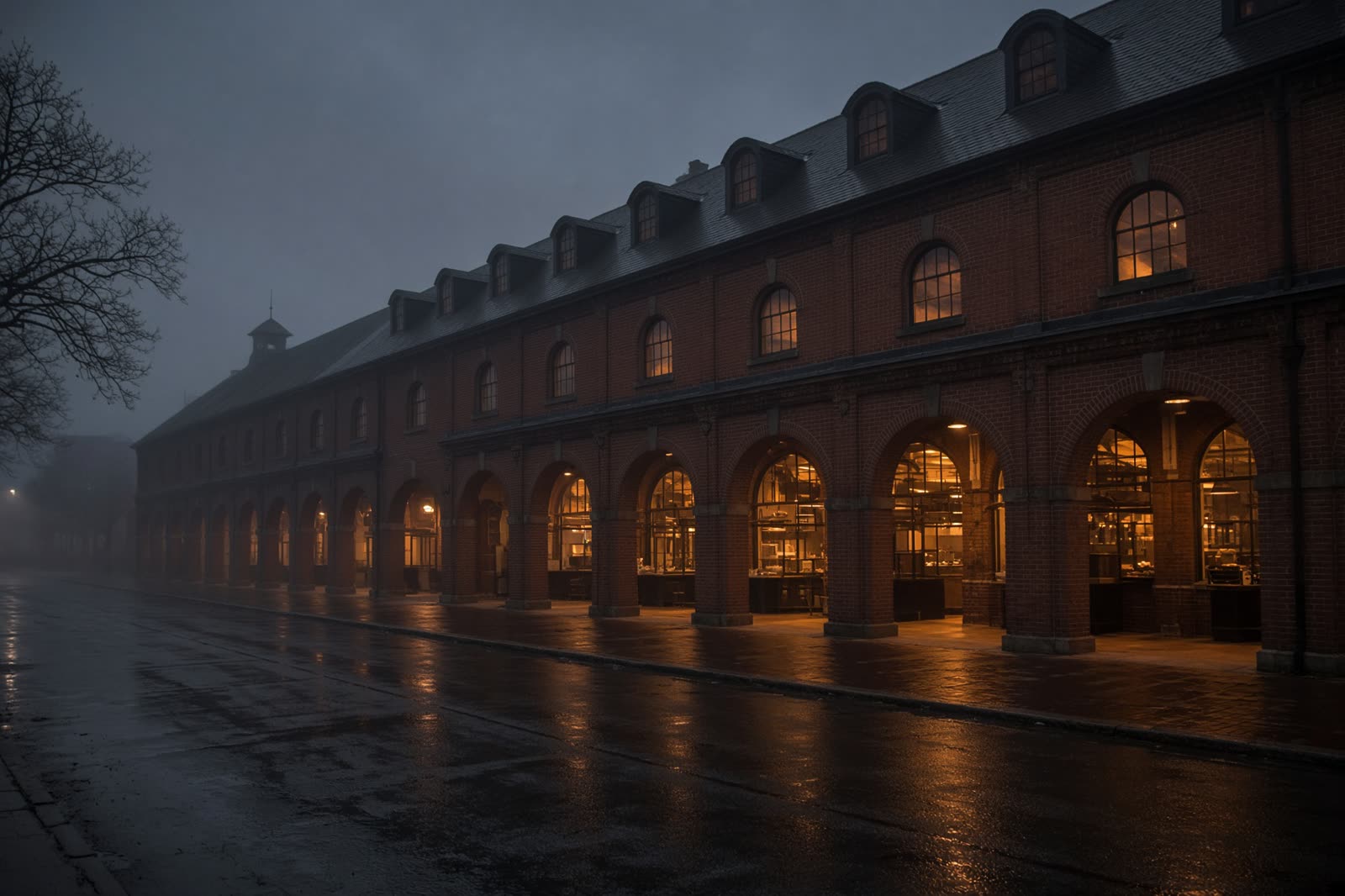
AI still: a market hall at dusk

After the courthouse exists. The next ships, the next roads, the people who would not stay in the first map’s ethnic boxes.

c. 1760

The Amish

Anabaptist cousins of the Mennonites, slower to come, then the ones the postcards stole. Oldest Amish settlement in the world is still this one. Largest, still. Eastern townships. They are not a museum. They are a people who kept the discipline when the rest of German Pennsylvania bought cars.

1740s–1756

Moravians

Lititz. Count Zinzendorf’s people. A closed community, then a town. They would not shoot in the Revolution and they washed the wounded in the Brethren’s House anyway. A small people with a large footprint on the north of the county.

The Dunkers

German Baptists

Church of the Brethren, Dunkards, river baptisms. Another peace church on this limestone. They do not get the tourist bus. They were here.

After 1783

Hessians who stayed

Prisoners from the barracks and the Lititz trench. German-speaking, looking at German-speaking farms. Some never took the boat home. Their grandchildren would be called Pennsylvania Dutch like everybody else. The county ate them.

19th century

Irish Catholics

Famine and mills. A church the Presbyterians and Mennonites had not planted. Nativism met them on the way in — Know-Nothings, the usual American welcome. They stayed. Parishes, politics, the city more than the township.

19th century

Jews

Congregation Shaarai Shomayim and the rest of the city’s Jewish life. Merchants, families, a cemetery, a people who had already been expelled from enough countries to recognize a charter that promised they could stay. Seventh Ward, for a time, was a mix the census still struggles to print.

19th century

Black Lancaster

Free people, formerly enslaved people, the Seventh Ward, Christiana in 1851, Stevens’s integrated cemetery as a last argument. This is not a southern story imported for color. It is this county’s. Housing covenants and who got hired on King Street are the sequel. The people are older than the sequel.

Late 19th / early 20th

Italians, Greeks, Eastern Europeans

The Seventh Ward again: German, Russian, Jewish, Italian, Greek, African American in the same blocks in the 1920s. Mill and market work. The county’s “English” and “Dutch” map does not get to erase them.

The 20th century did not stop at Amish buggies. The city changed first. The county is still catching up.

20th century

The Great Migration

Black families from the South into Pennsylvania mill and service work. The Seventh Ward as the map of where they were allowed to live. 1963 NAACP marches downtown over department-store hiring. The Civil Rights Act is federal paper. The local fight is who is behind the counter.

1940s–

Puerto Ricans

Farm labor first, then the city. Spanish in the market. Dutchirican when the names marry. By the 2010s the Hispanic population of the county had passed the Amish count. Puerto Rican is still the largest Latino origin here. That is not a footnote to the postcard. That is the city.

1975–

Vietnamese, Cambodian, Lao

After Saigon. Fort Indiantown Gap held thousands. Mennonite and church families in this county took people in. The first big modern refugee wave. Grocery, worship, grandchildren who do not owe anyone a gratitude speech and still get asked for one.

1987–

The refugee city

Church World Service opened a Lancaster office in 1987. The city picked up the nickname America’s Refugee Capital — more resettled per capita than almost anywhere that size. Bhutanese, Congolese, Cubans, Somalis, Syrians, Iraqis, Burmese, Ukrainians. Hurricane Maria sent hundreds of Puerto Ricans who were already citizens. Welcome is a practice here. It is also a fight. Both are true.

04 · 1775–1783

The American Revolution

This county made the rifles, sat Congress for a night, locked Hessians on Duke Street, and nursed the wounded in Lititz. It was not a battlefield. It was the shop, the jail, and the hospital.

The war did not start here. The work did. In June 1775 Congress asked Pennsylvania for expert riflemen. Thompson’s Pennsylvania Rifle Battalion took two companies out of Lancaster County. Lieutenant Colonel Edward Hand was a Lancaster man. Captain James Ross’s company was a Lancaster company. They walked to the siege of Boston with the long rifles these shops were already famous for. That battalion became the 1st Continental Regiment, then the 1st Pennsylvania. The Army likes to call it the original unit of the regular force. The original unit had Lancaster on the roster.

George Ross of Lancaster signed the Declaration of Independence — this county’s only name on that paper. He sat Congress in 1774, 1776, and 1777, inspected military stores, and wore a colonel’s commission. William Henry made rifles and sat Congress. John Hubley sat it too. Hand went on to adjutant general under Washington and came home to Rock Ford on the Conestoga. The names are local. The war was not a rumor they read in Philadelphia.

September 27, 1777. After Brandywine, the British had Philadelphia. The Second Continental Congress ran west, sat one day in the Lancaster courthouse, then crossed the river to York for the rest of the winter. Lancaster was the capital of the United States for a single night. The county still throws Capital Day. That is the postcard. The rest of the war here was barracks, hospitals, wagons, grain, and prisoners.

The military barracks at Duke and Walnut held thousands of captured British and Hessian soldiers. After Brandywine and Germantown the Moravian Brethren’s House in Lititz became a hospital. So did rooms in Lancaster, Ephrata, Manheim, Reamstown, Brickerville. The Hessian Trench in Lititz was dug in 1777. Some of those German prisoners stayed when the war ended — language, land, and a church they recognized. The British never occupied this town. They did not have to. The county was already feeding, arming, and housing the war.

Not everyone here picked up a rifle. Mennonites, Amish, and Moravians had been on this ground for a reason, and the reason was not a Continental commission. Some paid fines. Some hauled grain and still would not swear. Some were treated as suspect for staying home. Pacifism is also this county’s Revolutionary record. So is the fact that the remaining Conestoga were already gone — Paxton had finished that in 1763. The Revolution on this ground is guns, Congress, prisons, and the people who refused the guns. All of it.

1775

Thompson’s rifles

Two Lancaster companies in the first Pennsylvania rifle battalion. Hand second in command. Long rifles from these benches, later sold to the country as “Kentucky.” Boston first. Then the rest of the war.

1776

Ross’s name

George Ross, Lancaster lawyer, the county’s only signer. Inspector of supplies. Uncle of Betsy Ross, which the gift shops will tell you before they tell you he sat Congress three times and then the admiralty court when his health went.

Sept 27, 1777

One day as the capital

Congress in the courthouse for one sitting. Then York. The Articles of Confederation were finished over the river, not here. We keep the night. We do not get to keep the winter.

Duke & Walnut

The barracks

British and Hessian prisoners by the thousands in the town barracks. A prison is not a battle honor. It is still the war. Some Hessians never went home. Their German stayed.

1777–1778

The hospitals

Lititz Brethren’s House. Ephrata. Manheim. Reamstown. Brickerville. The wounded from Brandywine and Germantown came west. Moravians who would not shoot still washed the blood.

The ones who would not

Peace churches

Mennonite, Amish, Moravian. Fines, forage, suspicion. The county’s German belt did not enlist as a bloc. A Revolution section that skips the refusal is a poster.

04 · not a battlefield — still a fight

Fights, riots, propaganda

No pitched army vs army inside the modern county line in the Revolution or the Civil War. That is true. It is not the same as peace. This page is the smaller stuff we had not named yet — ferries, jails, presses, schoolhouses, a clinic window — and a list of the big ones we already told so we do not print them twice.

Already on this tab

  • Nations: Shenks Ferry absorbed, Beaver Wars, palisades at Washington Boro.
  • Founding: Cresap’s War. The ferries were the fights. Mason–Dixon is the ceasefire.
  • 1754: Braddock’s wagons, Shippen and Burd, recruiting for rank.
  • Through the years: Paxton, December 1763.
  • Revolution: Capital Day, barracks, rifles, pacifists who would not swear.
  • 1851: Christiana, the Gap Gang, Fillmore’s treason circus.
  • The century: Wrightsville bridge, June 28, 1863. That is the gunfight people mean when they say Battle of the Ferry.
  • Buchanan: the neighborhood war with Stevens. Copperheads and Radicals in the same pews.

Wright’s Ferry was not a battle

September 1777

The bottleneck

After Brandywine, Congress, the papers, the treasury, and the wagons hit Wright’s Ferry and had to get over the Susquehanna. Flatboats, rafts, dugouts, around the clock, into York. The British never had the boats or the local hands to follow. The river was the wall. Revolution already has Capital Day. This is the crossing that made York possible. There was no firefight on the bank in 1777. The Civil War burned the bridge that replaced the ferry. Do not mix the two.

1788–1790

Columbia, almost

Samuel Wright laid a town and named it Columbia as a bid. Washington liked the river site. Local and older papers (Morning Call, 1984; Uncharted) say a Wright’s Ferry capital bill passed the House and died in the Senate by one vote. The Residence Act still put the capital on the Potomac. We print the near-miss. We do not pretend the whole federal government turned on a Lancaster ballot.

Smaller colonial and war-era

1670s · the river

Canoe raids

Late Beaver Wars. Seneca and Mohawk parties down the Susquehanna hitting isolated camps in what is now Drumore and Martic, away from the palisades. Hit-and-run, not a siege. The big war is Nations. These are the creeks.

1715–1720 · Mine Ridge

Traders and hunters

French and unlicensed traders knocking into Shawnee and Conestoga hunting on the eastern ridge. Stolen pelts, guns, Governor Keith having to ride the argument down. Thin in the paper. Real enough that the province treated it as a war waiting to happen.

1770 · Lancaster jail

Lazarus Stewart

Paxton captain. Arrested in this county, escaped, recaptured, escaped again in irons. The 1763 massacre is the crime. This is the part where the courthouse could not hold him. We are not dressing a 1768 ‘jailbreak riot’ we could not source. The escapes are in the record.

1780s · Gap / Salisbury

The Doan corridor

The Doan Gang were Bucks County Loyalist outlaws — horses, tax money, the British in New York. The Gap road is a corridor. Documented shootouts sit thicker in Bucks. Eastern Lancaster was on the route. We do not steal Doylestown’s gang and plant them on Duke Street.

Press, pulpit, schoolhouse

1750s

Franklin vs Sauer

Franklin’s Charity Schools were sold as German education and read, correctly, as a machine to Anglify the children and maybe the army. Christopher Sauer’s press and the Lancaster German churches boycotted them into the ground. Franklin’s ‘they will Germanize us’ letter is real. He lost this county’s language war. The farms still talk.

Ephrata

The Cloister argument

Beissel’s Saturday Sabbath, celibacy, leaving a spouse for the Saal. Lutheran and Mennonite pulpits called it heresy. Families rode in to pull people out. The Cloister’s own press answered. Fraktur is in Founding. This is the fight over who owned a soul.

1775–1783

Disownment

Mennonite and Amish non-resistance vs a committee that wanted militia or a fine. Pay the tax, lend a horse, and the bishop might still shun you. Revolution already says pacifism is on the record. The internal church war is this card.

1838 · Harrisburg

Buckshot War

Stevens’s Anti-Masonic crusade out of Lancaster helped light a disputed election that put two legislatures in one capital and a mob in the halls. Stevens went out a window. The beating was in Harrisburg. The engine was here. We do not move the riot onto Penn Square.

1843 · Elizabethtown

Red pepper

Free School Act. Town vs farm, tax vs no tax, a blizzard packing both factions into a stove-hot room. Local telling — Uncharted, the trolley-era sketch — is that someone threw cayenne on the iron and the riot coughed itself out into the snow. The schools passed. We print it as local telling, not as a War Department dispatch.

1850s

Know-Nothings

Anti-Catholic, anti-Irish, ‘No Irish Need Apply,’ street preaching against popery. The Irish card in Arrivals already names the welcome. This is the brawl: windows, rallies, Safe Harbor and Marietta as the industrial targets. Labor at the iron works went ugly in the same decade — sheriff, clubs, a posse. Thin on the exact 1853 date. The class fight is not.

After 1990

August 24, 1991

The Klan on the sidewalk

City human-relations ordinance covering gay people. The Klan marched downtown in robes and hoods with Confederate flags. Counter-protesters. Police in the street between them. A 2024 LNP letter still starts the local hate timeline on that afternoon. We are not inventing a helmet count we could not source. The robes were here.

September 29, 1993

Lime Street

Firebomb through a Planned Parenthood window. Second hit in three months. No one in the building. Six figures of damage, clinic closed for weeks. Chicago Tribune, New York Times, the Post, LNP. Not a protest. An arson. We name it as arson.

1996–1997

Elizabethtown, again

School board ‘pro-family’ resolution: traditional family only, the rest of the kids off the page. National news, later a journal article, board elections as warfare. The 1843 pepper room never really emptied. It just got microphones.

August 2015 · Columbia

Rebel runs

Pickup convoys with Confederate flags through Columbia, Ephrata, Lancaster after the flag fights of that summer. A street fight on Walnut in Columbia, on camera. LNP and the TV stations. The 1863 bridge is history. This is the leftover costume, in traffic.

2017–2018

Target city

Lancaster as refugee capital made it a mark. White-nationalist recruiting and flyers, In These Times 2018 on how a small Pennsylvania city became a target. Identity Evropa was the national brand that year. We will not invent a midnight banner drop we could not pin to a police report. The targeting is documented. So is the pushback.

After the war, the first house of the county still burned.

Man-made · 1784 · Penn Square

The first courthouse burns

Lancaster’s first official courthouse, finished 1738 in the square, burned in 1784. Completely leveled. The county rebuilt on the same civic ground, new house 1787. Accidental urban fire, not a battle. Deeds and cases and the one-day capital sat in a building that did not survive its century. Later city-row blazes kept eating brick. This is the one that took the first house of the county.

Kind
Urban fire
Dead / hurt
Not a named mass-casualty list
Rebuilt
1787

The pike, the state capital, then the iron.

1795

The first long road

The Philadelphia and Lancaster Turnpike opens. First long-distance engineered paved road in the country. Tolls, stone, the inland marketplace made official. Conestoga wagons already had the name. The pike is why the county stayed the premium stop between the port and the west.

1799–1812

Capital of Pennsylvania

Thirteen years. The state government sat in Lancaster city before it moved to Harrisburg for good. Size, money, the pike. Not the one-day U.S. capital — that is 1777, in Revolution. This is the longer one. Harrisburg still has the dome. We had the years.

1812

The Fencibles

Congress timed a war with Britain while Napoleon had the Royal Navy busy in Europe. Lancaster raised a volunteer company — the old Lancaster Fencibles — Capt. John K. Findley on the roll. Local militia, supply lines, the fear of a raid up from the Chesapeake. Not a battle on the square. A county that had already been a depot once, doing it again. The Revolution chapter is 1777. This is the next British war.

1834

The railroad arrives

Philadelphia and Columbia Railroad. Atlantic shipping connected to this inland county overnight. Steam mills, iron, textiles. The same rails later hide people in false-walled cars and later still kill them in Rohrerstown and Christiana. The boom and the wrecks are the same iron.

05 · 1851

The Line

Mason–Dixon at the door. Columbia on the river. Christiana in the dirt. This county was one of the hardest hubs of the Underground Railroad in the country — and the place a Maryland slaveholder got told no.

It was not a universal sentiment. There were incidents both ways. Kidnappers in Gap. Informants. Neighbors who would have handed people over. And then there is September 11, 1851: William Parker’s house, a federal marshal, Edward Gorsuch from Maryland, and a porch that did not move. Slave catchers came up here to take people. The people who lived here said not on your best day. That one we claim.

Lancaster sits on the first real water after Maryland. The Susquehanna was the line freedom seekers had to cross. Columbia — Wright’s Ferry first — was the gateway. Local telling is that this is where the name Underground Railroad got coined: pursuers tracked people to Columbia and lost them so fast they swore there had to be a railroad under the ground. Historians argue the coinage. The vanishing is not an argument.

It was biracial on purpose. Free Black agents and white abolitionists in the same chain. Quaker farms in Christiana, Bird-in-Hand, Bart, Sadsbury. False walls in lumber cars. A cistern under a congressman’s lot downtown. Night runs north toward Reading and Philadelphia and, if the county was too hot, Canada.

The porch

William Parker

Born enslaved in Maryland. Free man in Christiana. Led the armed standoff at his house. Killed no myth — Gorsuch died on that ground. Parker could not stay. Fillmore’s people would have walked him south in chains and likely killed him for a white slaveholder’s death. He ran the Quaker chain to Rochester. Frederick Douglass hid him and bought the Lake Ontario ticket. Buxton, Ontario. Fifty acres. Local office. He wrote it down. He did not come back.

The lawyer

Thaddeus Stevens

Lancaster attorney, U.S. congressman, Underground Railroad agent. House and office downtown. Archaeology later found the cistern / hide on his lot. He spent money buying people free. He led the treason defense after Christiana. The fury of this county went with him to the Capitol. He later helped write the Fourteenth Amendment — equal protection, the sentence every modern civil-rights case still has to walk through. Buried in a cemetery that would take anyone, as a last argument. The Tales borrow names. This one was real.

Columbia

William Whipper & Stephen Smith

Two of the wealthiest Black businessmen in the country, lumber and railcars, based in Columbia. They financed the network. Secret false walls in cargo cars, people moved with the freight to Philadelphia and Canada. The river town was not only a ferry. It was a firm.

Whitson · Gibbons · Wright

The Quaker chain

Thomas Whitson and families like the Gibbons and the Wrights. Food, clothes, teamsters at night. When marshals ordered them into a posse to hunt their neighbors, a lot of them did not move. Pacifists who would not hunt. That is also a fight.

September 11, 1851

Edward Gorsuch comes north with Deputy Marshal Henry H. Kline of Philadelphia and a U.S. Commissioner’s warrant under Fillmore’s Fugitive Slave Act of 1850 to take four men out of Christiana. He had paid Gap Gang–adjacent informants to pin them at William Parker’s stone house. He thought it would be in-and-out. William Parker’s house. Free Black neighbors, women included, meet them. Gorsuch demands his “property.” Gunfire. Gorsuch is killed. His son is badly hurt.

The federal answer is not a local magistrate. Marines, marshals, Philadelphia police. House-to-house in Christiana, Bart, Sadsbury. Something like a hundred and fifty armed federal men. Thirty-plus Black men and five white neighbors charged with treason — levying war against the United States. It is still cited as the largest treason indictment in U.S. history.

They tried Castner Hanway first: a white miller who rode up and would not help the marshal. The government wanted a white “mastermind” rather than admit Black men had organized it. Thaddeus Stevens’s defense: a twenty-minute rural shootout over a warrant is not a war on the United States. The jury took about fifteen minutes. Acquittal. The rest of the treason case collapsed. Later murder charges went nowhere. Nobody was legally punished for Gorsuch.

War did not start in 1851. Fort Sumter is April 1861 — ten years. Kansas-Nebraska, Dred Scott, Lincoln, then the guns. Parker could not wait it out in a barn. The Act was federal law in every township. Canada was the only ground the marshal could not stand on.

Why he came

Edward Gorsuch

A rich Maryland planter with money for books, a federal badge, and a theory of the county that lasted until the porch.

He misread the Quakers

He knew the townships were full of Friends. He took pacifism for a guarantee that nobody would lift a hand, let alone a gun, if he showed a marshal and a paper. He did not account for the free Black neighborhood that would, or for white neighbors who would refuse the posse even if they would not shoot.

He believed his own story

He said he had “reared them with kindness.” He thought the four men had been tricked north and would fold if he looked them in the eye. That is the happy-slave sermon talking. It did not survive contact with people who had already decided they were not going back.

He thought the Act made him bulletproof

He was not a random vigilante. He hired Henry H. Kline, a hard Philadelphia deputy marshal, and carried a federal warrant. Interference was a federal crime. He assumed backwoods Lancaster would not risk treason over four men. He assumed wrong.

He had snitches

Gap Gang allies and local informants sold him the address. Parker’s stone house. Surgical, he thought. Instead he walked into a biracial self-defense network that had been practicing for this exact hour.

1850–1853

Millard Fillmore

We are not even-handed about this one. Fillmore signed the Fugitive Slave Act and treated resistance as a personal insult to federal power. When Christiana happened he sent force into this county to prove a point to Maryland and the slaveholders — Maryland’s governor had threatened secession if Lancaster was not punished. He tried to turn this place into a demonstration zone. Marines on dirt roads. Doors. Thirty-nine neighbors in a net. Fuck that president in particular.

His own Whigs would not renominate him. Lancaster’s Stevens Whigs walked. The party died. The anger helped build the Republican organization that later carried Lincoln. The Gap Gang — white kidnappers out of Gap — used his law as cover to snatch free Black residents and sell them south. Informants pointed at houses. Armed Black patrols and radical abolitionists threatened barns of anyone who helped the marshals. Harvest in the eastern townships stalled. Crops sat. That is not a clean mural of unity. It is the shitstorm he kicked off. He does not get a statue on this page.

He was not a cartoon idiot. He was a panicked institutionalist. 1850: Deep South conventions talking walk-out. He signed the Compromise, Act included, because he thought that paper was the only thing holding the Union. Southern politicians told him if the North did not hunt people, the bargain was dead. He used Lancaster as the test case to show the slaveholders he would keep the deal.

To him Christiana was not a farm fight. It was insurrection against the Constitution. Let this county get away with defying a marshal and, in his head, every Northern town follows. So he reached for Marines. Law and order as theater.

His blind spot was the North outside the Washington room. The Act had already horrified people who used to prefer quiet. Troops in the townships did not look like strength. It looked like a king. He made the resistors famous and pushed moderates into the anti-slavery camp. Calculated. Still stupid in the only way that matters: he planted the flag in the wrong dirt.

The chessboard

The worst possible county

A planter with money enough to buy better reading, and a president who should have been smarter, looked at this county — iron, rifles, grain, the shops that armed the Revolution, a people whose grandparents had already told a king no — and decided this was where they would show America what law and order looked like.

They picked a place founded by religious dissenters who left Europe because they would not let a government write their conscience. Quaker, Mennonite, Amish, free Black, Scots-Irish on the ridges. Here the law has always been circumstantial to the argument the locals are actually having. A warrant from Washington is a piece of paper. It is not a moral fact. Absolute geniuses.

They tried to lock slavery in forever by making an example of Lancaster. What they did instead was help kill the Whig party, build the anti-slavery Republican machine, and light a fuse that ended in a war that took the institution off the map. Lancaster did not have a conversation about law and order. It rewrote it.

The border after

Courts failed the South, so the line got meaner. Gap Gang and slave-catcher raids for spite and money. A Lancaster man who went into Maryland to petition for a free Black woman stolen off his farm was murdered there — widely read as revenge for Gorsuch. Guerrilla on a farm border, not a movie.

What the South learned

The Act could not be enforced here, even with troops. That is one of the facts that made staying in the Union look impossible to slaveholding politicians. Historians still argue how straight the line is from Christiana to Sumter. Nobody serious calls it nothing.

Parker’s end

Buxton, Ontario. Land. Office. Writer. Helper of people still coming. He won. He just could not win it on this limestone.

The middle of nowhere

The modern world files this county under farmland and tourism and does not look up. Then you count: the wagon that hauled the continent, the one-day capital, the rifles, Christiana, Stevens’s Fourteenth Amendment still sitting under every equal-protection case, Hershey cracking mass candy on Duke Street before he named a town. A quiet inland buffer — close enough to Philadelphia and Baltimore to catch the money, far enough to stay stubborn. Overlooked on purpose, and somehow still in the steering. The irony is the point.

06 · Wheatland

Thank you, Fuck you, BYE!

The only title that fits. Pennsylvania’s president. Lancaster’s house. Woodward Hill’s tenant. And the man who backed Fillmore’s law from down the road while this county was ready to throw hands with Marines. Fuck this president in particular, part two. We are not here to beat a ghost to death. We are here to be accurate.

Thank you

The points that count

He made this city home. Wheatland, 1848 until he died there in 1868. He is buried at Woodward Hill on South Queen, in the town that still has to explain him to tourists. For a hundred and sixty years he was Pennsylvania’s only president. That is not nothing. The house is a beautiful piece of work. You can walk it. We are not going to pretend the limestone didn’t raise his career.

Fuck you

The doughface

While Christiana was still smoking, Buchanan — Northern Democrat, Southern sympathy, the old word is doughface — backed Fillmore’s Fugitive Slave Act out loud. Letters arguing the South had every right to hunt people in Pennsylvania. Stevens downtown defending the resistors. Buchanan at Wheatland courting plantation money for a White House run. Same city. Opposite porches.

BYE!

He handed Lincoln a bomb

He did not hold the country together. He let the fuse burn to the last millimeter and refused to stomp it. Secession illegal, he said. Using the army to stop it also illegal, he said. So he counted the days to March 4, 1861, and told Lincoln: if you are as happy entering this house as I am leaving it, you are the happiest man in the country. He packed. The war started on the next man’s watch. Historians still park him at the bottom of the list. We are not going to rescue the ranking.

Born 1791, Cove Gap, Franklin County — not Queen Street. Dickinson College. Lancaster lawyer from 1809. The ‘from here’ is earned by the decades at Wheatland, not by a birth certificate. Biden, Scranton, 2020, finally broke the only-PA-president streak. That is a different county. It still ends Buchanan’s monopoly.

1853–1856 he was minister to Britain, which is how the Democrats sold him as clean of the Washington knife-fights. The South looked at a Pennsylvanian who had already sided with their property rights and said they could trust him. He won in 1856 on that. Christiana was not a campaign slogan. It was the test he had already failed in writing.

Inauguration week 1857: he leaned on fellow Pennsylvanian Justice Robert Grier so Dred Scott would come down broad — Missouri Compromise dead, Congress powerless to bar slavery in the territories. He told the country the Court would settle it. He already knew the ending. That is not statesmanship. That is fixing the game and calling it law.

Ann Coleman

1819. Young Lancaster lawyer, engaged to Ann Coleman, daughter of ironmaster Robert Coleman — one of the richest men in the state. The father thought Buchanan a climber. A misunderstanding, a broken engagement, Ann in Philadelphia. She died of a laudanum overdose. Instruction, accident, or intent: the record does not close. Coleman barred Buchanan from the funeral. Buchanan wrote that happiness had fled from him forever. He never married. We are not going to turn that into a joke. It is a rough life. It does not buy him a pass on the Act.

Harriet Lane

Orphaned niece, raised at Wheatland. She ran his White House as hostess at twenty-six. The papers called her First Lady in a way the title stuck; before that it was presidentress and Mrs. President. She seated Northern and Southern men so they would not fight over the soup. Popular. Stylish. Could not pull her uncle off the cliff.

The body and the house

One eye near, one far. He walked with the head cocked, and the cartoons never let him forget it. Consumption took most of a large sibling set. He outlived them. After March 1861 Wheatland was a gated argument. Mail that wished the place burned. Talk of hanging. We do not justify death threats or arson, on a president or anyone. We also cannot pretend we do not understand the temperature: this county was sending boys into a war a lot of people laid at his feet. He wrote a memoir insisting he had followed the law. Lancaster, by then a Republican war county, was not buying.

A mile of stone

Woodward Hill, South Queen: Buchanan behind iron, white marble, titles as a last brief. Shreiner-Conestoga, Chestnut and Mulberry: Stevens in the cemetery that would bury Black neighbors, epitaph on equality before the Creator. The county kept both graves. It did not keep them equal.

Also on this limestone

The other presidents

Buchanan lived here. The rest passed through. We are not going to inflate a layover into a hometown. Lincoln’s people are Berks, not us. Biden is Scranton. The visits are still real.

In office · 1791, 1793, 1794, 1796

George Washington

Not a resident. A repeat inland stop. July 4, 1791; November 14, 1793; October 26, 1794 on the Whiskey Rebellion troop movement; September 20, 1796 — night in town after the Farewell Address was in the papers, then Mount Vernon. Logistics and a bed. The rifles in Revolution are the deeper Washington tie. This is the man on the road.

May 28, 1800

John Adams

One night, government physically moving from Philadelphia to the new federal city. Lancaster County Historical Society has him watching fireworks set off in the prison yard in his honor. That is the clip. He did not stay to govern.

1861 · 1865

Abraham Lincoln

February 22, 1861, president-elect: balcony of the Caldwell House, Penn Square, where the Griest Building sits now. A short speech on the way to the inauguration. April 22, 1865: the funeral train through the county, people on the tracks. Ancestry: the Lincoln PA line is Exeter Township, Berks County — Mordecai, John, Abraham the grandfather. Next county. Local telling sometimes pulls that into Lancaster. We are not going to steal Berks. The balcony and the train are ours.

July 5, 1913 · in office

Woodrow Wilson

Unscheduled lunch after Gettysburg. Food brought to the train. About a hundred people at the station. A whistle, not a residency.

May 30, 1934 · in office

Franklin D. Roosevelt

Thirty-five seconds after dark, caboose, Gettysburg to New York. Crowd on the order of twenty thousand. Farmers. Mothers with infants. That is a stop. It still counts.

October 29, 1984

Ronald Reagan

Sitting president on the clock, Millersville, Pucillo Gym, nine thousand-plus after a storm. Mondale on the receiving end. Roses from a student. Campaign, not a hometown.

March 22, 1989 · in office

George H.W. Bush

Conestoga Valley High School. War-on-drugs speech. Private sit with Amish and Mennonite leaders. The county as a backdrop for a national line.

2004 · in office

George W. Bush

Lancaster Airport among the visits. Crowd in the tens of thousands. A fenced protest with coffins. The plane was the story as much as the speech.

2008 · candidate

Barack Obama

Buchanan Park, September 4, 2008. On the order of fifteen thousand in the heat. He was not president yet. The park is still named for the other man on this page.

Scranton · June 25, 2020

Joe Biden

Born St. Mary’s, Scranton, 1942. Moved to Delaware as a kid when the work dried. Second PA-born president; the one who ends Buchanan’s streak. June 25, 2020: Lancaster Rec Center, Fairview, health-care stop. Trump people and BLM people yelling from a hundred yards. Not from this county. On this county’s pavement that day.

October 26, 2020

Donald Trump

Sitting president, Lancaster Airport rally, about ninety minutes, rain and overnight lines. The county’s Republican margin is the reason the plane lands. We report the stop. We are not a campaign shop.

04 · 1851–1968

The wars. The votes. The work.

Honest history. The county did not sit out the Civil War, the world wars, the Depression, suffrage, or the fight for equal rights. Brief on purpose. None of it is a sidebar.

1851–1865

The Civil War

September 11, 1851, Christiana: William Parker’s house. A Maryland slaveholder, Edward Gorsuch, came north with a marshal under the Fugitive Slave Act. Free Black neighbors and fugitives met them with guns. Gorsuch was killed. The federal case that followed charged treason and collapsed. Some call it the first shots of the war. It was this county.

June 28, 1863

The bridge

Lee wanted Lancaster “under contribution” — food, horses, the rail — and a back door on Harrisburg. Jubal Early sent John B. Gordon at the Columbia–Wrightsville covered bridge. Colonel Jacob Frick’s Pennsylvania militia, including a company of free Black men from this county, burned the mile of wood rather than let the Army of Northern Virginia cross. Three days later, Gettysburg. The Confederates never forded here. The smoke was the point.

1917–1918

The Great War

More than five thousand from this county volunteered or were drafted. A lot of them went with the 28th Division. Armstrong Cork kept a service bulletin and later a wall of names. Hamilton Watch became the timepiece of the American Expeditionary Forces. The farms fed the army. The factories made cork, linoleum, watches. The county sent men and matériel. It also sent some of them home in boxes. There is nothing romantic about that sentence.

1915–1920

The vote

Pennsylvania men voted down a state suffrage amendment in 1915. The work did not stop. Mary B. Herr chaired the Woman’s Suffrage Party of Lancaster County. Congressman W.W. Griest voted for the Anthony Amendment. The legislature in Harrisburg ratified on June 24, 1919. The Nineteenth Amendment became law in August 1920. Women here organized, wrote, lobbied, and did not wait to be handed it. Suffrage was not a gift. It was a fight that this county’s women joined.

1929–1930s

The Depression

Pennsylvania unemployment peaked near 37 percent. This is a farm county. Crop prices fell through the floor. Banks called loans. Families ate what they grew and still lost the deed. The New Deal reached here: CCC camps in Pennsylvania parks and forests, WPA on roads and public buildings, AAA checks to farmers who cut production. The Amish stayed on the land and spent less. The city still had lines. Relief was not charity in the church-social sense. It was how a lot of this county ate.

1941–1945

The Second World War

Hamilton stopped making civilian watches in 1942 and built marine chronometers for the Navy — hundreds a month, the clock that a ship navigates by. Armstrong went over to war work. The farms ran again. Ration books. Blackout drills. Some Amish and Mennonite men took conscientious objector service instead of a rifle; that is also this county. The draft took the rest. The home front here was not a poster. It was a watch factory on Columbia Avenue and a linoleum plant and a field that had to feed two wars in one generation.

1950s–1960s

Equal rights

This is not Alabama. It was still a fight. Housing covenants. Who got hired on King Street. The Seventh Ward as the map of where Black Lancastrians were allowed to live. In the summer of 1963 the Lancaster NAACP marched downtown over department-store hiring; Rev. Alexander Stephan walked at the front. The local branch had already spent decades on The Birth of a Nation, on jobs, on schools. W. Miller Barbour and the Urban League worked housing and education when the cameras were pointed at Birmingham. The Civil Rights Act of 1964 and the Voting Rights Act of 1965 are federal paper. The local work is zoning, classrooms, and who is behind the counter. That work did not end in 1965. It still has not.

Christiana, the bridge, and Stevens are also in Towns. Suffrage: LancasterHistory on Herr and Griest. 1963 marches: Lancaster NAACP / LNP archive. Hamilton’s war work is the company’s own record. PA unemployment in the Depression is the state’s number, applied to a farm county that felt it.

Wheatland. Caramel. The rest of the 1800s that is not a flood or a blast.

1856 · Wheatland

Buchanan

James Buchanan of Wheatland, just west of the city, elected 15th president. Pennsylvania’s only one until Biden. The house is still there. The long telling — thank you, fuck you, bye — is the Buchanan chapter. We keep the house. We do not have to keep the grade.

1886

Caramel first

Milton Hershey, after going broke elsewhere, founds the Lancaster Caramel Company here. The fortune and the method from that plant are what later buy milk chocolate and a town with his name on it. The candy empire starts as caramel on this limestone, not as a kiss.

1881 · North Queen

Wrapper leaf

Lancaster County tobacco — cigar wrapper — went to Europe and the Caribbean. The brick warehouse that is now the Lancaster Arts Hotel was built in 1881 to hold it. Global leaf in a downtown shell. The rooms upstairs used to be inventory. That is the boom the farms still remember when the fields were not only corn.

Storms, rails, powder, the river, the plant next door. ’96 and 2026 keep their own chapters. The rest sit here in order.

Man-made · June 28, 1863

The bridge they burned

Columbia–Wrightsville. Longest covered wooden span in the world, on purpose set on fire by Union militia so Lee’s men would not walk into Lancaster County. That is a man-made disaster and a military decision. The full card is in The century. Not retold here so we do not double it.

Kind
Deliberate destruction
Dead / hurt
The war’s count, not a collapse’s
See
The century · Civil War

Natural · 1877

The F4

An F4 tornado — the deadliest on the county’s old Fujita list. Two dead. Twenty-five injured. That is the number the summaries still carry. Pre-NWS storm survey as we know it. The county’s tornado average is a fraction of one per year. This one was not average.

Rating
F4
Dead
2
Hurt
25

Natural · March 11–14, 1888

The Great White Hurricane

The Blizzard of 1888. Nor’easter that buried the Mid-Atlantic. Trains stuck in drifts. County paralyzed for days. This is the winter people meant when they still had living grandparents who remembered a white that would not quit. 1996 is the one we have a full section for. 1888 is the ancestor.

Kind
Blizzard / nor’easter
Dead / hurt
Regional; not a clean county ledger here
Effect
Rail stopped. County stopped.

Man-made · 1894 · Rohrerstown

Passenger into freight

A passenger train and a freight train met at Rohrerstown. Wooden cars came apart and burned. Multiple fatalities. The busy Lancaster lines got stricter after. Rail is how this county moved freight and people. Rail is also how it killed them when the schedule and the wood failed.

Kind
Rail collision + fire
Dead
Multiple (period press)
Where
Rohrerstown

Both · 1897 · Conestoga at Safe Harbor

The iron bridge goes in

High wind and strain. An iron railroad bridge over the Conestoga at Safe Harbor snapped and dropped into the water. Workmen died. Same year the lists also carry major urban fire in the county’s towns — 1784 took the first courthouse; 1897 is the later brick-and-iron year. If a second courthouse blaze is thinner in the clips than the bridge, the bridge is the one we can stand on. Both stay on the year.

Kind
Bridge collapse · wind + iron
Dead
Workmen killed (several)
Where
Safe Harbor

Natural · March 8, 1904

The ice that ate Collins

Two-foot river ice after a brutal winter. Jam on the lower Susquehanna. The river jumped about ten feet in five minutes. Walls of ice erased the village of Collins in Conoy Township — hotel, station, lock houses, ground off the map. A forty-car train smashed at Red Hill. Safe Harbor crushed; houses later sold for salvage at thirty dollars. Army tried bombing the ice. Collins did not come back. A control tower shoved off its pad was about what was left.

Kind
Ice jam flood
Rise
~10 ft in five minutes
Dead / hurt
Town gone; people fled the ice
Lost
Collins, Conoy Twp

Man-made · June 9, 1906 · 12:42 p.m.

Shenks Ferry dynamite

R. McAfee Powder & Oil, Bausman’s Hollow, Conestoga Township — punch house with 2,500 pounds of dynamite, more in the nitro plant, glycerin on the ground, a boxcar waiting for the Port Road. A roar, a yellow flash. Eleven men inside obliterated. Nine more hurt. Glass out a mile and a half. Forest flattened. A watch stopped at 12:42. The New Era called it the most horrible accident that had ever occurred in Lancaster County. The wildflower preserve sits on that hollow now. This is not the Safe Harbor blast. That is 1930.

Kind
Industrial explosion
Dead
11
Hurt
9
Load
2,500 lb in the punch house

Man-made · c. 1903–1906

The Low Grade’s dead

Building the Atglen & Susquehanna / Enola Low Grade through the cliffs killed on a scale the county does not put on a postcard. Uncharted Lancaster’s count is about two hundred dead on the job. Fifty buried on a hill above old Safe Harbor. Dynamite, falls, the river, the immigrant labor pulled off the boats. Not one blast. A construction that ate men until the fill was done.

Kind
Construction
Dead
~200 (compiled)
Buried at Safe Harbor
~50

Natural · 1918

Influenza

The 1918 pandemic hit Lancaster County. Schools, churches, the usual shutdowns. Several hundred county dead is the archive range LNP still uses; exact counts slip. Young adults died in a way COVID later did not. The state ledger names Lancaster among the places the flu wrote down. Not a flood. A winter that did not need the river.

Kind
Pandemic
County dead
Several hundred (archive range)
U.S. dead
~675,000

Man-made · December 10, 1930

Eight tons on the cliff

Safe Harbor Dam under construction. A premature blast of about eight tons of dynamite in the rock. Nineteen workers killed at once. Dozens hurt. One of the deadliest industrial days in the region. Not Shenks Ferry. Not the 1897 bridge. The dam that still sits on the river was paid for in men.

Kind
Construction blast
Dead
19
Hurt
Dozens
Charge
~8 tons

Natural · March 1936

St. Patrick’s flood

The 1936 Susquehanna flood — St. Patrick’s Day in the books upriver. Harrisburg and the main stem made the national clip. Lancaster’s river towns sat in the same basin. Ice, rain, a crest the valley still uses as a mark before Agnes rewrote the mark. Not the deadliest here. It belongs on the river’s list.

Kind
River flood
Basin
Susquehanna
County dead
Not the Agnes number

Natural · November 4, 1950 · Ephrata

The Ephrata tornado

A strong tornado — filed as F3 / EF3 in later conversions — cut about 4.7 miles east of Ephrata. Substantial structural damage. This is the mid-century twister the county lists next to 1877 and 1989. Not 2026. That one has its own section.

Rating
F3 / EF3 (as filed)
Path
~4.7 miles
Where
East of Ephrata

Natural · October 16, 1954

Hurricane Hazel

Hazel arrived as wind more than as a river. Destructive high-velocity winds across the county. Nine injured. Severe property damage. A hurricane inland is still a hurricane when the trees come down.

Kind
Hurricane remnant · wind
Hurt
9
Dead
Not the Agnes ten

Man-made · 1960 · Christiana

Freight off the rails

A Pennsylvania Railroad freight — hazardous cargo in the telling — derailed near Christiana. Trackside structures crushed. East Coast freight delayed for days. The same town as the 1851 resistance. Different century, same rails.

Kind
Hazmat derailment
Where
Christiana
Dead / hurt
Thin in the clips we could pin

Natural · June 21–24, 1972

Agnes

The worst natural disaster in the county’s recorded history. Remnants of Hurricane Agnes stalled on a wet basin. Lancaster County took 8.46 inches. Ten dead here — highest death toll of any Pennsylvania county in that storm. Manheim about 40 percent underwater. Marietta fled. Property in Manheim alone over a million 1972 dollars. Bridges gone, including the singing span that smashed into the railroad bridge. Statewide: on the order of fifty dead, billions in damage, tens of thousands of homes. This is still the flood people mean.

Rain here
8.46 in
County dead
10 (highest in PA)
PA dead
~50
Manheim
~40% underwater

Man-made · March 28, 1979

Three Mile Island

Partial meltdown of TMI-2. The plant is Dauphin County, in the river, not a Lancaster address. The five-mile and then twenty-mile advice zones ate western Lancaster anyway — Bainbridge, Conoy, Falmouth, the river towns that can see the stacks. Pregnant women and preschool children told to leave the five-mile. Schools shut. On the order of 140,000 people left the wider area. No blast in this county. Panic, cars, a weekend that taught the valley what downwind means. Official acute death toll from the accident itself is not a Lancaster body count. The fear is the local record.

Kind
Nuclear · partial meltdown
Plant
Dauphin Co., on the river
Evacuation
5 mi, then ~20 mi advice
People who left the area
~140,000

Man-made · 1983 · Marietta

The fireworks plant

Blast at a fireworks works in Marietta. Buildings leveled. Windows out for miles. Two workers killed. Hundreds of nearby residents moved off. River town, powder, the same geography that floods. Not Shenks Ferry. Not Safe Harbor Dam. A third kind of boom.

Kind
Industrial explosion
Dead
2
Hurt / moved
Hundreds evacuated

Man-made · May 4, 1986

Kissel Hill on fire

Stauffers of Kissel Hill farm market, Rohrerstown Road. Fast fire. About two million in damage. More than two hundred neighbors pulled out because pesticides were in the burn. Forty-five fire companies — a county record at a single fire. No mass-death number in the clips. Poison smoke is the disaster as much as the building.

Kind
Industrial / agri-fire
Damage
~$2 million (1986)
Evacuated
200+
Companies
45

Man-made · 1987

The anthrax scare

A 1987 agricultural-anthrax lab scare shows up in disaster roundups: accidental exposure or release, emergency response, a localized lockdown. The public record we could pin to a named lab and a named street is thin. It stays on the list because the lists keep it. We will not invent a body count or a building we cannot source. If the original clip surfaces, it belongs on this card.

Kind
Public health / lab
Dead / hurt
Not established here
Record
Thin. Still listed.

Natural · June 15, 1989 · Manor Twp

Supervisor Road

F2 tornado came across from York County. Homes flattened on Supervisor Road. Seven injured. Not 2026 Columbia. Same river, different year, different rating.

Rating
F2
Hurt
7
Dead
0 on the summaries we used

Natural · January 1996

The Blizzard of ’96

Nearly two feet on this county, more in the hills. Full section sits just below this century block. Not doubled.

See
The ’96 chapter
Snow here
~20–24 in typical

07 · iron

Trolley and railroad

The pike was first. Then the railroad ate the county. Then the trolley ate the stage. Then the railroad and the car ate the trolley. One unnamed Millersville span is still sitting in the creek as piers. Johnny’s video is the field report. The rest is the paper trail.

The forgotten Millersville trolley bridge — Johnny Von Duke

Watch on YouTube

The railroad that did not die

1834: Philadelphia and Columbia. First railroad in the county, the inland hook to Atlantic shipping. That card is already in The years. 1857: the Pennsylvania Railroad buys the line. From then on this is PRR country — steam mills, iron, textiles, the same rails that hid people in Whipper and Smith’s false-walled cars and later wrecked them at Rohrerstown and Christiana. Those wrecks stay in the disaster list. This chapter is the line itself.

The Atglen & Susquehanna / Enola Low Grade cut the cliffs and killed on the order of two hundred men. That card is under The century. What it left is a high fill you can still walk. Columbia’s Port Road hugged the river. The passenger station that still matters opened in 1929, north of downtown, PRR brick. Amtrak took the corridor. Keystone Service from 1972, Harrisburg–Philadelphia, Lancaster (LNC) on the clock. The Pennsylvanian still goes through. You cannot trolley the square anymore. You can still get on a train in this city and leave it.

The trolley

1874: horse car, Lancaster to Millersville, replacing the stage so Normal School students could get to town. Brunswick Hotel, out Manor Street, end of the line South George and West Frederick. Thirty minutes. Carbarn at 143 West Frederick — the building is still there. 1891: the wire goes up. 1899: Conestoga Traction Company, seven spokes off the city — Lititz, Manheim, Ephrata, Strasburg, Quarryville, Columbia, Marietta, Elizabethtown, the farm towns. 1913: twelve million rides in a year. Rocky Springs in the summer. A baggage car for semester trunks.

December 1903: Lancaster & York Furnace Street Railway, the Pequea trolley, 12.5 miles south of Millersville. Open cars in the heat, students to the river for swimming and boat races. Last run October 15, 1930, Harry Bortzfield at the stick, scrapped the next spring. Most of Conestoga’s country lines were dead by the early thirties. The Ephrata run was ordered to keep going through the war. City Birney cars lasted until September 20, 1947. Tracks came out of Penn Square on July 14. Buses. Conestoga Transportation, then Red Rose in 1976. A shelter on Route 999 in Millersville is still a bus stop.

Johnny’s telling: official end 1947, little pieces limping into the sixties and early seventies; cars not common in his neighborhood until the seventies, so it was the train as much as the automobile that killed the trolley — great-granddad climbing out of the grave with a stick. Southern county, not enough power on a grade, overweight cars, passengers out in the road pushing. That one is his, and it is funny on purpose.

The bridge with no name

Millersville. South of the old Normal School. Piers in the Conestoga. Johnny went to the borough office. The register is empty.

The photo at the start of the video is, as far as he could prove, the only shot of the span before it came down. No name on the old maps. No tax card. Locals will tell you the piers go back to the 1860s. The paper trail that does exist says trolley over the Conestoga south of Millersville on the Pequea line — Uncharted Lancaster still points at those piers. Last car on that line, 1930. After that the company dissolved, the wood sat, and everybody in town knew it was a death trap, so they did not walk it.

Johnny’s neighbors put the collapse in the 1970s or 1980s. A Conestoga crossing at Millersville also shows up in flood talk, Agnes 1972 among the years that tore river bridges out. We are not going to pretend we have the demo permit. The borough did not have one either. What is on the ground: cracked piers by the old processing plant, now a biological preserve, the industrial line turned into a quiet. He and his friends climbed them as kids. Do not. They can let go.

He wanted someone from the borough, not the city, to break the rest of the file. Until then this is the record: one photograph, a YouTube, the piers, and a county that paved over the rest of the trolley until even the name of the bridge fell out.

08 · the roster

Names this county put on the country

Buchanan and Stevens have their own rooms. Hershey, Parker, Whipper, Hand, Ross — already on this tab. These are the rest we are not leaving on the floor. Corruption, a sniper at Gettysburg, a boat that changed the rivers, a Precisionist from North Lime, a band that started when the local ones fell apart. Halestorm, Live, and Fuel are York and Harrisburg. They do not get stolen.

Power

Maytown

Simon Cameron

The machine. Lincoln’s first Secretary of War. Resigned under a cloud of contracts and kickbacks so thick Congress could smell it. The line hung on him — “an honest politician is one who, when bought, will stay bought” — whether he said it or it was said about him. He still ran Pennsylvania Republicans for decades. Maytown boy. We print the graft with the power.

On the lists

Thomas Mifflin

Philadelphia-born. Major general. Signed the Constitution. First governor of Pennsylvania under the 1790 frame. The famous-Lancastrians lists keep him. The birth certificate does not. We will not steal a baby. We will say the inland capital years and the army tied him to this ground.

War

Lancaster city · July 1, 1863

John F. Reynolds

Major general, I Corps. Born here. Rode onto the field at Gettysburg in the opening hours, put infantry on the ridges that held the town, and was shot. Highest-ranking Union general killed in that battle. The opening minutes are still argued as the ones that kept the high ground. The county put a statue up. Hand and Ross are in Revolution. Reynolds is the Civil War name on the same roster.

New Holland · Ephrata

Richard “Dick” Winters

Easy Company, 506th PIR, 101st. Born New Holland, raised Ephrata. D-Day, Carentan, the Bulge. Ambrose wrote him. HBO filmed him. The man was a Lancaster County officer before he was a miniseries. We do not need the score to know the job.

Make

Little Britain

Robert Fulton

Born in the south end, township later named for him. Not “invented the steamboat” — that claim is sloppy. Built the first commercially successful one, Clermont, 1807, and changed rivers, freight, and navies. Artist first, engineer after. The county’s other invention with a worldwide job, next to the wagon.

Lancaster · Precisionism

Charles Demuth

Born here 1883, died here 1935. Watercolor, oil, the factories and grain elevators painted hard and clean. I Saw the Figure 5 in Gold, after Williams’s poem. The house on East King is a museum. He is the painter this city actually produced, not a visitor with an easel.

The collaborator

Lydia Hamilton Smith

Stevens’s household and partner in the work. Underground Railroad, real estate in Lancaster and Washington, a Black woman holding property when the law barely admitted she could. The long telling is 1851 and Stevens & Smith. She is not a footnote to a white congressman.

Stage

Ronks · Conestoga Valley

Jonathan Groff

CV High. Spring Awakening. King George in the original Hamilton. Frozen. Mindhunter. Tony for Merrily We Roll Along. The voice a lot of the country heard before they knew it came off a county road.

Manheim Township

Kristen Wiig

Born in New York State. Formative years here: Nitrauer, Manheim Township. SNL, Bridesmaids, the rest. She is on the Lancaster list because she grew up in the schools, not because she was born on Duke Street.

Sport

Lancaster · Donegal

Bruce Sutter

Hall of Fame relief pitcher. Split-finger. Cy Young. Born here. The county’s Cooperstown card.

Manheim Township

Jim Furyk

Born West Chester. Raised and schooled here. PGA, U.S. Open, the swing the commentators never shut up about. Another one we claim by the hallway lockers.

Lancaster · NASA

Andrew J. Feustel

Astronaut. Born here. Space station, shuttle, spacewalks. The county sent someone off the planet. Evelyn Ay Sempier, Ephrata, Miss America 1954, is the other mid-century name the papers still run.

Loud

Lancaster · 2013

From Ashes to New

Matt Brandyberry and the wreckage of other local bands. The name is the origin story. Recorded at Atrium Audio with Grant McFarland and Carson Slovak — same room that forged August Burns Red. Rap, nu-metal, electronics, rock radio. Drag Me and the Reflections cycle took Mainstream Rock. Die For You on the same run. This is the modern export we were not going to skip.

Manheim · 2003

August Burns Red

Metalcore that actually came from this county, not the next one over. Manheim. Atrium. The heavy lineage FATN stands next to. Halestorm is Red Lion. Live is York. Fuel is the Harrisburg side. Those stay on their own maps.

Lititz

The Districts

Indie rock off a Lititz basement. National stages, still the town. Proof the county’s noise is not only breakdowns and Broadway.

04 · January 1996

The Blizzard of ’96

January 6–8. Still the snow this county measures other winters against.

A nor’easter came up the coast, met Arctic air, and sat on Pennsylvania. Snow started January 6, 1996. The heavy band ran the 7th into the 8th. The papers called it the Blizzard of ’96. Some called it the blizzard of the century. NESIS rated the storm Category 5 — Extreme. Most observing sites never met the official three-hour blizzard definition. The county did not need the definition. It needed a shovel.

Lancaster city took more than two feet. Parts of the county woke up to about 30 inches. LNP still ranks it as the biggest snowstorm on the local record. Across the river, York County spots went 30-plus; Glenville logged on the order of 38 inches, the high mark in the commonwealth that week. Harrisburg International’s official 22.2 inches is only third on that climate site — Jonas in 2016 later beat it there. This county’s memory is not Harrisburg’s airport.

Governor Tom Ridge put a statewide travel ban on until January 10. Schools shut. Businesses shut. Grocery shelves went empty after the ban lifted because the trucks could not move either. One Lancaster General cesarean got a doctor in on a snowmobile and a husband who needed the mayor’s permission to drive. That is what a ban looks like when it is real.

Then it melted. Mid-January turned warm. Rain fell on two feet of pack. The Susquehanna and the creeks took it. Harrisburg’s Walnut Street Bridge went down on the 20th. Philadelphia had its worst flood in twenty years. Lancaster is a river county. The blizzard is the snow. The flood is the second act. Same winter.

05

The map

One city, eighteen boroughs, forty-one townships, and the villages the post office still knows by name. The Susquehanna on the west. The rose outline is the county line. Filter the pins. Click a name to fly there.

Rose · boroughsPale · villagesDim · townshipsWhite · nightmares

06

Towns and settlements

The county is not six postcards. It is a city, eighteen boroughs, forty-one townships, and a long list of villages that never incorporated and never left. Featured first. Then the rest of the roll.

AI still for Lancaster

County seat · Red Rose City

Lancaster

Laid out in 1730, named for the English shire and the House of Lancaster’s red rose. County seat, one-day capital of the United States, home of Central Market and the Fulton Theatre. In the Tales, this is the epicenter — the clock, the brick, the alleys that remember.

AI still for Columbia

Wright’s Ferry · the river

Columbia

John Wright’s ferry on the Susquehanna, later renamed Columbia in a bid to become the nation’s capital. River port, canal town, railroad hinge. The bridge was burned in 1863 to slow a Confederate advance. Above it stands Chickies Rock — and the Albatwitch.

AI still for Millersville

The Normal School

Millersville

A borough between the city and the river towns. Pennsylvania’s first state normal school opened here in 1855; it is Millersville University now. Campus brick, old trees, and the feeling that the county is always just over the next rise.

AI still for Lititz

Moravian · 1756

Lititz

A closed Moravian church settlement until the mid-1800s. Linden Hall. Julius Sturgis’s pretzel bakery — the first commercial pretzel bakery in America, 1861. A Main Street that still behaves like a Main Street. The Corpse House is not a metaphor.

AI still for Ephrata

The Cloister

Ephrata

Conrad Beissel’s Ephrata Cloister, founded 1732: a German Baptist community of celibate mystics, fraktur, and a cappella. Northern Lancaster County still carries Old Order Mennonite roads and the quiet of that older piety.

AI still for Strasburg

Steam and iron

Strasburg

The railroad town. Strasburg Rail Road still runs steam through Amish farmland. The Railroad Museum of Pennsylvania sits across the road. In the Continuum, the rails are a timeline you can hear coming.

AI still for Marietta

River brick

Marietta

A compact river borough between Columbia and the Donegals. Front Street still faces the Susquehanna. Shank’s Tavern and the Railroad House keep the bar lights on — and, if you ask the night staff, a few extra patrons who do not pay.

AI still for Manheim

Stiegel’s town

Manheim

Laid out in 1762 by ironmaster Henry William Stiegel, who named it for his German hometown. Baron Stiegel’s glassworks made the place famous; the borough still sits north of the city on the road to Lebanon County.

AI still for Elizabethtown

Northwest hinge

Elizabethtown

Where Lancaster County leans toward Dauphin. College town, old main street, the road to Harrisburg. Masonic Homes occupies a piece of the ridge. The county’s northwest door.

AI still for Quarryville

The south · Solanco

Quarryville

The borough the southern townships orbit. Solanco country: Drumore, Fulton, Little Britain, Colerain. Slate, dairy, and the long run down to the Maryland line.

AI still for Mount Joy

West of the city

Mount Joy

A railroad borough on the way to the river. Bube’s Brewery still occupies its 1800s block — restaurant above, catacombs below. Ghost Hunters filmed here. The Tales did not have to invent a basement that remembers.

AI still for Christiana

The Resistance · 1851

Christiana

The county’s smallest borough, on the Chester line. In September 1851, William Parker and a self-defense company stopped a Maryland slaveholder’s raid. Edward Gorsuch died. The Christiana Resistance is not folklore. It is the record.

The other boroughs

Seven more. Still boroughs. Still on the map.

Antiques Capital · Berks line

Adamstown

Northeast borough, half in Berks. Sunday antique strip. Stoudt’s country. The county’s other door, the one that faces Reading.

Between Ephrata and Lititz

Akron

A small northern borough on the Cocalico slope. Residential, quiet, named for the Ohio city. The map still needs it.

Cocalico

Denver

Northern mill-and-farm borough. East Cocalico wraps it. Reinholds and Reamstown sit next door.

North of the city

East Petersburg

A borough in the first ring above Lancaster. Hempfield country. You are out of the city and not yet in the farms.

West toward Columbia

Mountville

Between Lancaster and the river towns, on the old Columbia Pike. Small, brick, easy to miss if you only drive through.

Blue Ball road

New Holland

Eastern borough. New Holland Agriculture took the name worldwide. Earl Township is the farmland around it; Blue Ball is the crossroads just west.

Northeast rise

Terre Hill

The high-ground borough in East Earl. Small, Welsh-German, looking toward Caernarvon and the Chester hills.

Forty-one townships

Pennsylvania does most of its living in townships. Lancaster County has forty-one. Every one of them is named here.

Solanco south

Bart

Southern township. Georgetown and the old nickel mines sit in this ground.

Bowmansville

Brecknock

Northeast township. Bowmansville, Fivepointville, and the Devil’s Race Track.

Welsh name

Caernarvon

Far east. Churchtown. Named like the Welsh county, because the settlers were.

Northern woods

Clay

Hopeland and the state game lands. The county gets forested up here.

Octoraro

Colerain

Southeast, toward Chester and Maryland. Kirkwood. Scots-Irish naming, creek country.

The namesake

Conestoga

The river, the wagon, the people. Safe Harbor is where the Conestoga meets the Susquehanna.

River northwest

Conoy

Bainbridge and Falmouth. Haldeman Mansion. The river is the west wall.

Susquehannock State Park

Drumore

The bluff township. The park looks down the Susquehanna toward Maryland.

New Holland’s farm

Earl

Eastern township around the borough. Martindale. Earl is a translation of Graf.

Denver · Reamstown

East Cocalico

Northern township on Cocalico Creek. Adamstown sits on its edge.

Maytown

East Donegal

Northwest of Marietta. Maytown’s square. Donegal Presbyterian is older than the county seal.

South-central

East Drumore

Between Quarryville and the river townships. Mechanics Grove. Dairy ground.

Terre Hill · Blue Ball

East Earl

Northeast. Goodville, Weaverland, the road to Caernarvon.

Landisville · Salunga

East Hempfield

West-northwest of the city. The Hempfields were English names on German farms.

Bird-in-Hand · Smoketown

East Lampeter

The tourist township. The mile between Smoketown and Intercourse is the postcard.

South of Quarryville

Eden

Small southern township. The name is a claim. The soil almost backs it up.

Brickerville

Elizabeth

Northern township. Brickerville, the old furnace lands, the road to Lebanon County.

Around the Cloister town

Ephrata Township

Wraps the borough. Akron is next door. Northern Mennonite roads.

The inventor’s county

Fulton

Robert Fulton was born in this county. The southern township took the name. Peach Bottom is the river end.

The city’s ring

Lancaster Township

Wraps the Red Rose City. School Lane Hills, Bausman, the first farms you hit leaving town.

Intercourse · Gordonville

Leacock

Amish heartland. Intercourse, Gordonville, the roads the tour buses learned to pronounce.

Mason-Dixon south

Little Britain

The name is the boast. Wakefield. The Maryland line is the next fence.

Most populous township

Manheim Township

North of the city: Neffsville, the sprout, the malls. Not the borough. The big one.

Conestoga Town

Manor

Washington Boro, Millersville’s neighbor, the 1763 village site. One of the largest townships. The wound is here.

The Pinnacle

Martic

Martic Forge, Holtwood, the river hills. Rawlinsville. Overlooks that will drop your stomach.

Ridge of Death

Mount Joy Township

Around the borough, toward Elizabethtown. Local talk still uses that name for a cursed stretch of ridge.

The village and the township

Paradise

East of Strasburg. Vintage, Kinzers. The railroad and the Amish share the same grade.

Penryn

Penn

North-central. Penryn, the game lands, the road to Manheim borough.

The creek township

Pequea

South of Millersville, down to the river. Pequea village. Long Level. Another way to the water.

New Providence

Providence

South-central, above Quarryville. New Providence village. The name is a prayer and a post office.

Around Manheim

Rapho

A large northern township. Mastersonville. The farms that feed the borough.

Christiana’s township

Sadsbury

Southeast, on the Chester line. The Resistance happened in this ground.

Gap · White Chimneys

Salisbury

Far east. Gap. White Chimneys has been standing — and, people say, occupied — for three centuries.

Around the railroad

Strasburg Township

The farmland the steam train still cuts. Refton. The museum is across the road from the borough.

Leola

Upper Leacock

North of Leacock. Leola, Bareville. The other half of the Leacock name.

Lititz’s township

Warwick

Rothsville, Kissel Hill, Brunnerville. The Moravian town sits inside this map.

Reinholds

West Cocalico

Northwest of Denver. Reinholds, Blainsport, Schoeneck. Cocalico split in two; this is the west half.

Rheems

West Donegal

Elizabethtown’s neighbor. Rheems. The Donegals remember the Scots-Irish who named them.

Brownstown

West Earl

Between Ephrata and New Holland. Brownstown, Farmersville. Earl, divided.

Mountville’s farms

West Hempfield

Between the city and Columbia. Silver Spring. The pike to the river.

Willow Street

West Lampeter

Due south of Lancaster. Willow Street, Lampeter village. The first fields on the way to Solanco.

Villages the map still says

Unincorporated, census-designated, or just a name the road still uses. Not a complete farm-lane index. The ones people actually mean when they say they are from here.

East Lampeter

Bird-in-Hand

Named for an inn sign. The eastern postcard starts here.

Leacock

Intercourse

The name the tourists come to photograph. A real village with a real post office.

Salisbury

Gap

Where the hills open toward Chester County. White Chimneys is in this country.

West Lampeter

Willow Street

The southern suburb that still has a village name. Hans Herr country is just down the road.

Upper Leacock

Leola

A working village between New Holland and the city. Not a borough. Still a place.

East Donegal

Maytown

A square in the northwest. Older than it looks from the highway.

Manor · the river

Washington Boro

The river village in Manor Township. Shad, brick, and the wide water.

Conestoga meets the river

Safe Harbor

Dam, park, the mouth of the Conestoga. The water remembers more than the plaques.

Martic

Holtwood

River hills and the dam. Pinnacle overlook. The south county’s high places.

Conoy

Bainbridge

Northwest river village. Haldeman Mansion. Falmouth is the next landing.

Brecknock

Bowmansville

Northeast. The Devil’s Race Track sits in the rocks above the turnpike.

East Hempfield

Landisville

With Salunga, the Hempfield villages west of the city.

East of Strasburg

Ronks

Railroad and buggy country. The steam train still uses this name.

Leacock

Gordonville

Amish town. Auction, hardware, the roads that do not need a legend to feel old.

The village

Paradise

Inside Paradise Township. Vintage and Kinzers down the line.

West Cocalico

Reinholds

Northern village. Schoeneck and Blainsport nearby.

Elizabeth

Brickerville

Furnace village in the north. The woods start to win.

East Earl

Blue Ball

The crossroads named for an inn sign, like Bird-in-Hand. New Holland is next door.

Caernarvon

Churchtown

Welsh-named township, English-named village. The far east.

The village

Conestoga

Inside the township of the same name. The river is west. The wagon started as a local fact.

The village

Pequea

Creek mouth, river hills, the long way down from Millersville.

Manheim Township

Neffsville

The township’s village core, north of the city.

Warwick

Rothsville

East of Lititz. Kissel Hill is the next rise.

East Cocalico

Reamstown

North of Denver. Another Cocalico name the map still carries.

Martic

Rawlinsville

South county crossroads. On the way to the river overlooks.

Colerain

Kirkwood

Southeast village toward the Octoraro.

Little Britain

Wakefield

Down by the Maryland line. The name is the claim.

East Lampeter

Smoketown

Between Lancaster and Bird-in-Hand. Airport, markets, the start of the east.

07

Monsters, cryptids, and nightmares

Creepypasta. Urban legends. Ghosts with a county address. The things that bump in the night here have names, streets, and sometimes a festival. The Tales borrow the real ones. Then they invent the rest. The long catalogue — beasts, houses, Native yarns, hex, attractions, film — is the Legends tab.

AI still: a river cliff at dusk, standing in for Chickies Rock

Chickies Rock · Columbia

The Albatwitch

Lancaster County’s own cryptid: a four-foot, apple-snatching “little Bigfoot” in the trees above the Susquehanna. Picnickers since the 1800s have blamed missing fruit — and cores thrown back — on a hairy figure with yellow eyes. The name is usually told as Pennsylvania Dutch for “apple snitch.” Columbia still throws it a festival.

Chiquesalunga · the cliff

Chickies Rock

The quartzite bluff is older than the county. Lovers’ ghosts, a shadowy hat man, unseen eyes, a 1946 report of a tall bandage-headed thing with knives in the wrappings, and the 1969 “ghost mania,” when hundreds claimed to see something on the ridge. The Tales did not have to invent a haunted overlook.

Pennsylvania Dutch country

Elbedritsch

A snipe-hunt creature from German-speaking folklore: you hold the bag, the others drive the Elbedritsch toward you, and it never comes. Harmless until it isn’t — a joke that teaches you the woods have a sense of humor, and that the woods might be in on it.

The powwow tradition

Braucherei and hex

Pennsylvania Dutch folk practice. Braucherei — powwow, in English — is Christian folk healing: charms, scripture, the laying on of hands. Hexerei is the curse-work people hired the braucher to undo. Hex signs on barns are mostly later decoration. The 1928 Rehmeyer’s Hollow murder next door in York County is the dark end of that belief. We do not pretend the line is clean.

Lancaster city

The Fulton

One of the oldest continuously operating theatres in the United States (1852). Actors and ushers have been reporting residual company — footsteps, a woman in the house — for as long as anyone has bothered to write it down. A stage that keeps its ghosts is useful if you tell stories for a living.

Mount Joy

Bube’s Brewery

Alois Bube’s 1800s block still stands: bottling works, hotel, restaurant, and the catacombs underneath. A woman in a long gown in the gallery. A man who did not leave. Ghost Hunters filmed the basement. The night shift will tell you the bottles are not the only spirits in the house.

Marietta

The river inns

Shank’s Tavern and the Railroad House sit on Front Street facing the Susquehanna. Cold spots, a Victorian girl who likes games, a woman called Annie who flirts with the taproom, men who used to work the railroad and apparently still do. River towns keep their dead the way they keep their brick: close.

Lancaster township · Edward Hand

Rock Ford

The 1790s house of Revolutionary War General Edward Hand. Footsteps in empty rooms, knocks, conversations with no one in them. Some houses remember the war. This one was invited to.

Franklin & Marshall · Old Main

Gallows Hill

Old Main sits on the city’s old gallows ground, where people were hanged before 1834. The bell has a habit of sounding in the night with nobody pulling it. Albert, the office ghost, is the polite version of the same story: the hill never really cleared.

Bainbridge · Conoy Township

Haldeman Mansion

A 1700s house on the river. Oral history says workmen found dozens of unmarked graves when they dug. Reports run a grouchy man, children, a singing woman in the summer kitchen. The mansion does not pretend to be empty.

Bowmansville · Brecknock

Devil’s Race Track

A rocky outcrop in the northeast, in the shadow of the turnpike. Local talk gives it fiddle music with no fiddler, a track the Devil ran, and the kind of melody you are not supposed to follow into the trees.

Conestoga / Martic woods

Shenks Ferry

The old railroad tunnel and the wildflower preserve on ground that held Late Woodland towns before any county existed. Night drivers talk about a figure in the tunnel. The woods were occupied first. They have not entirely vacated.

Gap · Salisbury Township

White Chimneys

A house that has been standing, in some form, for three hundred years. Family, fortune, and the claim that the place has never been without company. Eastern farmland. A long memory.

The dungeon

Columbia Market House

The 1869 market still runs. Under it: a lockup people still call the dungeon. River-town lore does not skip a basement that used to hold people. The Tales would be lazy if they invented a different one.

General Sutter Inn · the Corpse House

Lititz after dark

Moravians kept their dead in the Corpse House before burial. The General Sutter Inn on the square has the usual inn inventory: footsteps, rooms that do not stay empty. A town that once locked the gates at night still knows how to keep a vigil.

Lancaster city · ghost-tour country

The Walking Tombstone

Downtown Lancaster’s ghost walk still works Central Market, the old jail, Duke Street, and a monument people call the Walking Tombstone. Urban legend with a street address. Creepypasta, if you heard it on a phone. A county story, if you heard it on Queen.

Mount Joy Township

Ridge of Death

A stretch of ridge the township still knows by that name. Curse talk, wreck talk, restless-ground talk. We report the nickname as the locals use it. We do not bless it.

The mouth of the Conestoga

Safe Harbor

Dam, park, drowned river bottom. People go missing in big water. The park feels gentle in daylight. Night stories from the landing do not. The Conestoga ends here. So do a few other things.

Pennsylvania, borrowed and recast

The wider woods

The Squonk weeps itself into a puddle in the hemlock forests farther north. Thunderbirds and black dogs turn up in river-country talk. Point Pleasant’s Mothman is West Virginia’s — Tales of the Red Rose moved him to Lancaster on purpose. We steal from the region, then we lie. That is the job.

08 · Circa the 2020s

Modern day — the 2020s

This section is the county as it stands in the 2020s. Not 1730. Not a frozen postcard. The 2020s. Circa the 2020s. Census first, then the names. City and county are not the same country. Leave no one off the list because they ruin the postcard.

Downtown came back in this century: Central Market still open, galleries, kitchens, Clipper Magazine Stadium, students from Millersville and Franklin & Marshall walking King and Prince. The river towns keep their brick. The eastern townships keep their buggies. The clocktower still keeps the hour.

July 2025 Census estimate: about 563,000 in the county, about 58,400 in the city. The county is still majority non-Hispanic white — roughly 78 percent. Hispanic or Latino, any race, about 12 percent. Black about 6 percent. Asian about 3 percent. Native, including Alaska Native, under 1 percent and still here. Two or more races is no longer a rounding error. The 2010–2020 growth was entirely from nonwhite groups. The white share fell. That is the math.

The city is the other math. About 41 percent Hispanic, about 40 percent non-Hispanic white, about 14 percent Black, about 3 percent Asian, a large mixed census. Poverty: about 8 percent in the county, about 20 percent in the city. Foreign-born about 6 percent county, 13 percent city. A language other than English at home: about 17 percent county — that number includes Pennsylvania German — and about 33 percent in the city. Do not quote the county as if it were the city. Do not quote the Amish as if they were the city.

Everybody who lives here gets named. The tourist who does not live here does not. The postcard is not a people.

That is Lancaster County circa the 2020s: dense enough to be a region, old enough to creak, mixed enough that the postcard is a lie if you stop at the buggy, alive enough that the Tales have to keep updating the map.

Eastern townships

Plain people

Amish, Old Order Mennonite, other plain. Tens of thousands. Largest Amish settlement on earth. Tourism makes a product out of them. They farm, build, and opt out of the state’s idea of a good citizen. They are not costumes. Some of the county resents the traffic. Some of the traffic resents being asked to slow down. Both of those people live here. The buses do not.

The majority inheritance

Pennsylvania Germans and other whites

Lutheran, Reformed, the old English, Irish, Welsh, later Italians who got counted as white when the century turned. The majority of the county is still this, even as the share drops. It includes the farm and the subdivision and the person who thinks the city is a problem. It includes the person who does not. A majority is not a monolith. It is a head count.

City first

Latino Lancaster

Puerto Rican majority among the Hispanic numbers, then Dominican, Mexican, and the rest of the hemisphere. Spanish on King Street, in the stalls, in the churches. Larger than the Amish count in this county and still treated as new. They are not new. Farm labor in the 1940s. Grandchildren now. The ugly: nativist politics, who gets pulled over, who gets the headline. The true: this is already a bilingual city whether the township likes the sound.

City and county

Black Lancaster

From the enslaved through Christiana through the Seventh Ward through 1963 through now. About 6 percent of the county, about 14 percent of the city. Churches, businesses, the long memory of covenants. The ugly is the leftover map — who lives where, who gets hired, who the crime watch photographs. The people are not the crime watch. They are older than the county’s comfort with them.

Several diasporas

Asian Lancaster

Vietnamese and Cambodian families from the 1970s. Bhutanese from the camps in Nepal. Burmese. Indian and Chinese and Korean professionals and stores. About 3 percent and not one story. Do not mash them into a single festival booth and call it coverage.

Still arriving

Refugees and asylees

Congolese, Syrian, Somali, Cuban, Iraqi, Ukrainian, and the lists that will be different next year. CWS, churches, landlords who will and will not rent. 2025: federal tap turned down; the office said it would not resettle new neighbors in Pennsylvania for a stretch. The people already here did not vanish with the press release. America’s Refugee Capital is a nickname. Nicknames do not pay rent.

Still here

Jews

Synagogues, families, a community small enough that every generation has to decide whether to stay. They have been in the city since the 19th century. They do not owe anyone a lesson. They live here.

Still here

Native people

No reservation. No federal recognition in Pennsylvania. Census numbers under 1 percent, plus everyone the form never caught. Descendants of the nations in the section above — some in Oklahoma and Ontario, some in this county anyway. The 2020s did not finish a vanishing that 1763 started. We already said that. It belongs here too.

The form caught up

Mixed, other, and the rest

Two-or-more-races jumped hard in 2020, a lot of it Hispanic residents the old form had nowhere to put. People who will not pick one box. People the boxes were not built for. If this page only lists the old nations and the old churches it is lying about the 2020s.

The 2020s

Queer Lancaster

Pride in the city. Plain communities that do not. Kids who leave the township and kids who stay. This is not a tourist talking point and it is not a secret. They live here. The ugly is who gets the pulpit against them. The true is they are not new either.

Honest

The gap

City poverty at about one in five. County poverty less than half that. Unhoused people in a farm county that tells itself it is wholesome. Opioids. The tourist gaze that wants buggies and not the Seventh Ward. Anti-immigrant politics aimed at people whose kids already speak the market. Crime that is real and a crime watch that can turn into a hunt — we already said we will not do that. Wealth on the limestone. Need on the brick. Both are Lancaster County circa the 2020s.

Who works

The people who pick and plate

Migrant farm labor, kitchen labor, warehouse labor, the job the census undercounts. Some documented, some not. This page will not hunt anyone. It will also not pretend the food on the postcard grew itself. If you eat here, they were in the field or the dish room.

The 2000s and the 2020s still flood. A germ still shuts the county. Columbia 2026 has its own chapter at the bottom.

Natural · September 2004

Ivan’s leftover rain

Remnants of Hurricane Ivan. Marietta took the hit: about five homes with water on the first floor, another forty-five flooded. Not Agnes. The river town got wet again. Frances had already soaked the ground.

Kind
Tropical remnant · flood
Marietta
~50 homes wet
Dead
Not a county-killer storm

Natural · August–September 2011

Irene, then Lee

Two punches. Irene softened the ground. Lee dumped — locally up to about fifteen inches in the wettest spots. One of the wettest multi-day stretches in county memory after Agnes. Creeks, basements, the Conestoga. Not ten dead. Still a flood year people date from.

Kind
Two tropical leftovers
Lee, locally
Up to ~15 in
Dead
Not Agnes’s ten

Natural · 2020– · circa the 2020s

COVID-19

A pandemic in the decade this page is written from. Hospitals, nursing homes, the Amish settlement, the city, the plants that did not pause. County death and case counts moved with the waves; we are not going to freeze a number that the dashboard still revises. 1918 was the last time this county shut that hard for a germ. This one is the 2020s.

Kind
Pandemic
Years
2020 onward
Count
Live dashboard, not a carved stone

Natural · September 2021

Ida

4.73 inches of rain. Conestoga River to its third-highest crest on record. Water rescues. Remnant of a hurricane that had already wrecked the Gulf and New York’s basement. Here it was the creek out of its banks.

Rain
4.73 in
Conestoga
3rd-highest crest
Kind
Flood · rescues

Natural · August 20, 2026

Columbia and York

EF-1 on the river, EF-2 next door in York. Firehouse brick, school roof, thousands without power. Full section and photographs at the bottom of this tab. Not doubled.

See
The 2026 chapter
Columbia
EF-1 · ~100 mph

Not weather. Still this county.

October 2, 2006 · Bart Twp

West Nickel Mines

A gunman took an Amish schoolhouse. Five girls killed. More wounded. He died there. The community’s public forgiveness of his family went around the world in a week. Grief is not a brand. Forgiveness is not a demand we get to make of them twice. The school is gone. The county still knows the date.

09 · Tales of the Red Rose

Why this land writes the stories

Geography first. A wide river with a cliff on it. Limestone and corn. Fog that sits on King Street like it pays rent. Rail cuts, covered bridges, a clocktower, alleys that still gaslight. You can film a time rift in a county that already looks like two centuries standing in the same field.

Then the folk. Albatwitch in the apple trees. Ghosts on Chickies. Catacombs under Mount Joy. A tunnel at Shenks Ferry. Braucherei and hex. A theatre that will not stay empty. Americana with the bark still on: the wagon, the rifle, the one-day capital, the market that never closed. We do not have to import a haunted America. We live in one.

Then the dark that is not folklore. The Conestoga dead. A war that used this river as a hinge. Alternate histories are a parlor game until you stand on ground where the official story already murdered somebody. American Ghoul, INJUSTICE: LANCASTER, The Time Rift of Lancaster County, Mothman of Lancaster — they are fictions. The stage is not.

Lancaster is the epicenter. Every city has a shadow. Ours just happens to be long, and named, and still walking.

Open the Tales

10 · August 2026

The August 20 tornadoes

Columbia, Lancaster County. Wrightsville, York County. Same storm. Same afternoon. The current year.

Thursday, August 20, 2026. Severe storms crossed the Susquehanna in the late afternoon. The National Weather Service in State College later confirmed two tornadoes, minutes apart, on opposite banks.

At 4:24 p.m. an EF-2 touched down about two miles south-southwest of Wrightsville in eastern York County. Peak wind 120 mph. Path 1.07 miles, about 100 yards across. It snapped trees on Vista Lane, then hit Eastern York High School — classroom roofs ripped off, auditorium roof torn, brick shifted at the top of the wall. Houses on Winding Way lost windows and siding. One injury: a window blown into a house. The tornado lifted before Chateau Circle. Zero deaths.

Six minutes later, 4:30 p.m., an EF-1 came down in Columbia. Peak wind 100 mph. Path 1.47 miles, 100 yards wide. It started where Walnut meets Fourth. A section of second-story brick on the old Keystone firehouse went down onto Avenue H and the neighboring shop — The Broome Closet, a ceramics studio sharing the wall. Roofs off. Outbuildings down near Avenue K. Limbs and roof damage on Malt. Large trees snapped along Manor and Furnace where it crossed the Columbia Reading Railway. Woods south of town and Blue Lane: trees uprooted and snapped. It lifted before Richland Drive. Zero injuries. Zero deaths in Columbia.

Lancaster County issued a disaster declaration. Columbia’s mayor declared a state of emergency. Thousands lost power across the two counties that night. The NWS survey on the 21st was done with Lancaster County EMA, Columbia Borough Police, Millersville University students on this side, and York County EMA on the other. The statements are preliminary until they land in Storm Data. NWS also flagged that more surveying in Lancaster County could add to the day’s count. This page will not get ahead of that.

This is Lancaster County’s second confirmed tornado of 2026. York is the neighbor. The river is the hinge. The photographs below are Johnny Vanduke’s — walked, not wire — from the community board in the days after.

Photographs: Johnny Vanduke, walked after the storm. Same shots live on the Community board.